1980s living room flooring and storage layout in Singapore
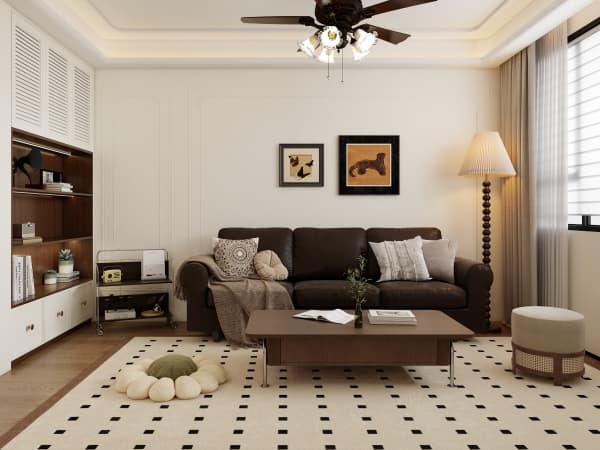
The HDB Renovation Guide Singapore here renovates the living and dining area of a flat built in the 1980s, centred on flooring choices and storage with real measurements. The core answer is that you pick a floor that hides uneven old screed, then build storage to the wall with clear dimensions, so the room gains order without losing space.
Why the 1980s floor needs thought
Older flats often have uneven flooring and hollow tiles from decades of settlement. The living and dining area is large, so the floor choice sets the look and the budget. Storage matters too, because a 1980s layout may lack built-ins the family now needs.
Flooring choices
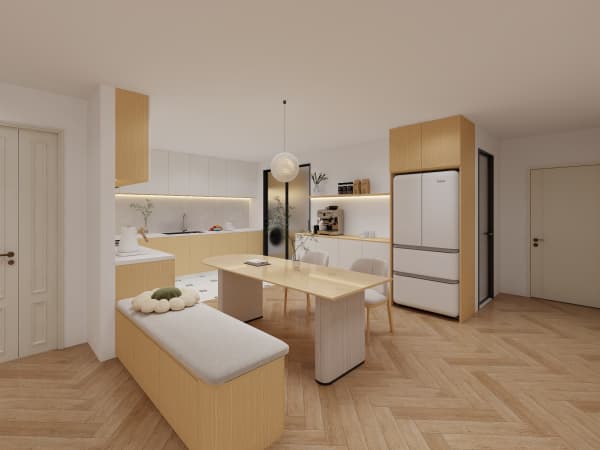
Vinyl planks cost S$3 to S$7 per square foot and sit well over uneven screed, hiding small dips with an underlay. Laminate at S$5 to S$9 per square foot looks warmer but hates water, so keep it away from the dining spill zone. Homogeneous tiles at S$6 to S$10 per square foot are the toughest and suit a busy living area, though they need a flat base.
If the old tiles are sound, overlay new vinyl on top rather than hacking them, which avoids the restricted screed and permit cost. Test for hollow tiles first; reset any that sound dull.
Storage ideas with measurements
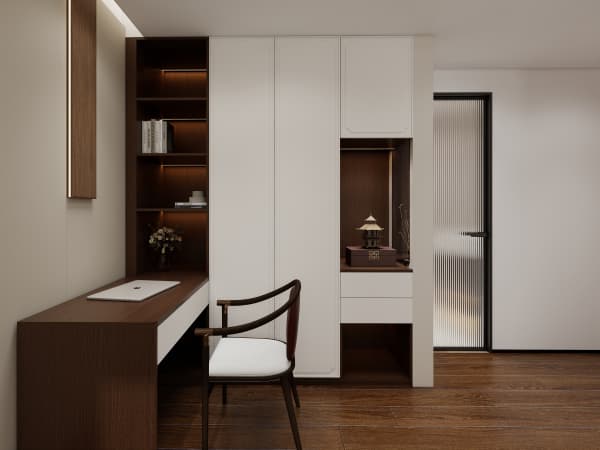
Build a low feature cabinet along one wall, 45 centimetres deep and 90 centimetres tall, holding the TV and books without blocking sightlines. A full-height shelf wall, 30 centimetres deep with shelves 35 centimetres apart, uses dead air above a sideboard. Leave a 1.2 metre walkway between sofa and dining table so the room stays open.
For the dining side, a bench with lift-up storage 40 centimetres deep seats two and hides linen. A console 35 centimetres deep behind the sofa holds keys and chargers out of sight.
Layout tips
- Run the floor in one direction to lengthen the room visually.
- Keep the TV cabinet against the longest wall for balance.
- Store daily items low, display items high.
- Leave the centre clear so the 1980s space reads modern.
Costs and HDB permit rules
Overlay flooring and painting need no permit, but tiling with hacking follows the 9am to 6pm, Monday to Saturday rule. Fixed carpentry needs HDB approval, and only HDB-registered contractors may do regulated works. You cannot hack structural walls or the bomb shelter. A living and dining refresh in an older resale flat often runs S$8,000 to S$18,000 with floor and carpentry.
FAQ
Can I hack the old tiles? The original screed is restricted in many flats, so overlay is safer and cheaper.
How deep should the TV cabinet be? About 45 centimetres clears most sets and media gear.
Will vinyl hide uneven floors? Yes, with underlay it smooths minor dips better than tile.
An older living and dining area turns around its floor and storage. Choose a forgiving surface, build to the wall with measured cabinets, and the 1980s flat gains a layout that feels current and calm.