Custom Furniture for shophouse: Pieces You Can Take Along
Custom Furniture for a shophouse should lean movable wherever you can — a conserved shophouse rarely lets you hack a wall, and most tenants don't own the place. The smart play is freestanding, bolt-on pieces you pack up at the end of the lease instead of built-ins you leave behind. Here's what works and what to skip.
Why Shophouses Punish Built-Ins
Most shophouses here fall under conservation rules, so you can't chase a wall or drill the party wall without approval. Even where you can, the next tenant may not want your carcass. Freestanding custom pieces dodge both problems — you keep them, the wall stays whole.
We build them to sit proud of the old floors too. Shophouse levels are rarely straight, and a fixed unit shows every dip as a visible shadow line.
Custom Furniture You Can Pack Up
These are the pieces worth commissioning:
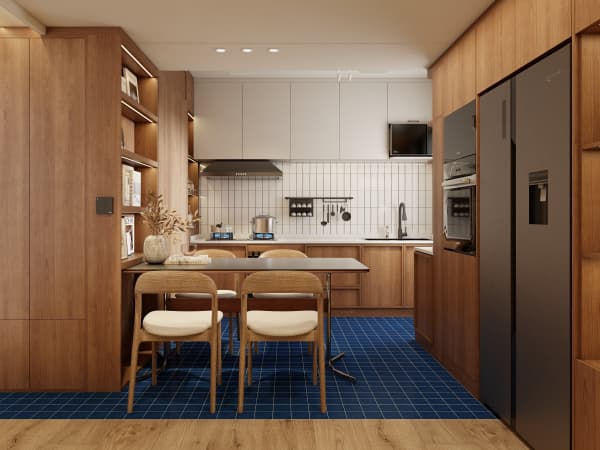
A kitchen island on castors — a timber top with a plywood body you wheel to the window for light, then tuck into a corner. Take it to the next home.
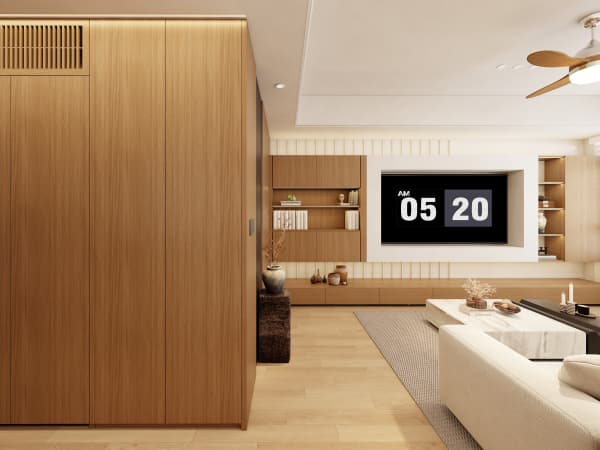
A wardrobe on feet — a full carcass, not fixed to the wall, so you slide it out on moving day.
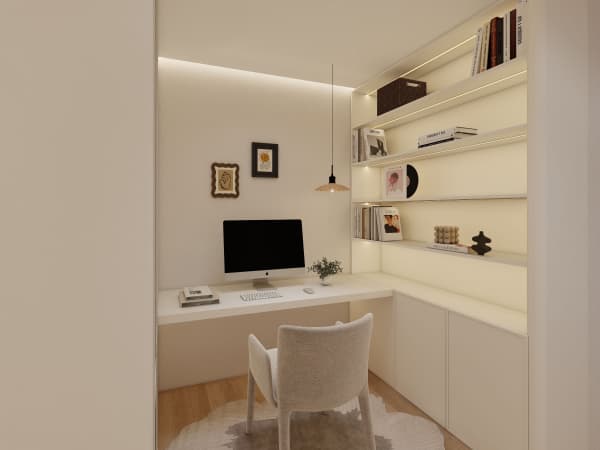
Open shelving on a bracket rail — the rail stays, the shelves travel; or take the whole rail if it's yours to remove.
A bar cabinet — a self-contained box that doubles as a sideboard wherever you land next.
Materials That Survive a Move
Weight decides whether you'll actually carry it:
Plywood takes knocks better than MDF and is lighter than solid wood, so it's our default for movable bodies.
Solid wood looks great and lasts, but a full teak island is a two-person lift and a pain up a narrow shophouse stair.
Laminate over MDF keeps cost and weight down, but MDF swells if it sits on a damp ground floor, so we avoid it near the front where the monsoon drains back up.
Cost, Timeline, and What to Ask
A movable island runs roughly S$1,200 to S$3,500 depending on the timber; a freestanding wardrobe about S$1,800 to S$4,000. Lead time is the usual 6 to 10 weeks from measure to delivery. Ask the maker for knock-down fittings — bolts and cam locks rather than glue — so the piece comes apart at the stair and goes back together inside.
Keep the 1-year defect liability period in writing even for loose furniture; a joint that works loose in month two should be fixed free.
Resale and the Next Home
Movable custom furniture holds value because it isn't stuck to one wall. A buyer of your next flat may not want your layout, but they'll take a good island. Plan the dimensions to a standard run — 600mm deep, 900mm tall — so the piece fits an HDB or condo kitchen too.
Skip anything that needs the shophouse's exact quirk to work. The moment a piece only fits one awkward corner, it becomes the next owner's problem, not your asset.

If you're in a shophouse on a lease, treat custom furniture as something you own, not something you gift the building. Pick pieces that come apart, weigh what one person can shift, and size them to a normal kitchen run so they follow you to the condo or the BTO later. That way the money stays yours and the conserved wall stays untouched, which is the whole point of renting a place you can't rebuild.