Bathroom Vanity Singapore: Right storage that lasts
Search trends show that a Bathroom Vanity in Singapore is one of the most searched home projects, yet few guides explain the order of works clearly. This piece walks the sequence the way local builders actually run it.
What fit-out practical tips cost you in the end
Keep one contact who owns the whole fit-out. When the painter, the electrician and the carpenter point at each other, a single owner of the result cuts the delay. Agree that person before the first tool, and the job has a throat to choke when something slips.
Common questions about reading a quotation
A quotation should read like a bill of materials, not a single sum. Look for the board grade per cabinet, the edge type, the hinge brand class, the number of drawers, and the lighting. If an item is missing, assume the cheapest version, then decide. A clear quote also lists what is not included, like plumbing or hacking.
Understanding custom versus ready furniture in Singapore
Ready furniture wins on price and speed for the common pieces, and you can see it before you buy. The trap is forcing a standard size into a tight room and living with the gap. A mix works best: custom for the fixed walls, ready for the movable pieces you may take along.
A practical view of hinges and soft-close fittings
Hardware is where cheap jobs fail first. A soft-close hinge that closes a door without a slam feels small but runs the daily life of a kitchen. Spec a concealed, adjustable hinge with a built-in damper, and use screwed inserts in particle board so the screw holds. The face looks the same; the feel gives it away in a year.
In Clementi, a a studio apartment often comes with an awkward service yard, and the build that works treats it as a second kitchen rather than a dump. A S$18,000 budget stretches further when the yard pulls its weight.
Getting maximising cabinet storage sorted early
Storage fails not from lack of cabinets but from poor internals. Deep drawers beat deep shelves because you see everything without digging. In a Singapore kitchen where space is tight, a pull-out for the blender and a tray divider for the lids turn a cramped cabinet into a working one. Spend on the inside, not just the face.
In Bukit Batok, a an executive apartment often comes with an awkward service yard, and the build that works treats it as a second kitchen rather than a dump. A S$30,000 budget stretches further when the yard pulls its weight.
Understanding plywood for wet areas in Singapore
Near the sink and the cooktop, moisture and heat decide which board survives. Plywood, made of cross-laminated veneers, holds its shape far better than particle board when it gets damp, so most carpenters use it for sink cabinets and the kickboard zone. A good birch or hardwood plywood in Singapore runs about S$6,000 to S$9,000 for a full kitchen, and it is money well spent where water sits.
Understanding indoor air and board grade in Singapore
Air quality is a system, not one product. Low-emission board plus a low-VOC edge glue plus a week of airing beats any single premium buy. Ask the carpenter for the glue grade too, because a great board with a poor adhesive still off-gasses. The whole chain must be clean.
Where carpentry warranties usually go wrong
A carpentry warranty in Singapore typically runs one to five years, with the better shops giving three. Read what it covers: warping, delamination and faulty hinges are fair game, but water damage from a leaking pipe is usually on you. Get the coverage and the claim process in writing, because a verbal promise fades by the time something breaks.
Getting measuring for accuracy sorted early
Measure twice, cut once is not a joke in carpentry. A good carpenter measures the real wall at three heights because Singapore flats are not perfectly plumb, then builds to the worst case and scribes the filler. A cabinet that meets the ceiling with a 10 mm gap looks cheap; a scribed one looks built in.
Understanding layered lighting plans in Singapore
Plan the lighting before the carpenter measures, because the power points and the profiles must be built into the cabinet. Retrofitting a strip after the boards are up means visible wires or a rebuild. Tell the carpenter your light plan on day one, and ask where the driver hides so it stays serviceable.
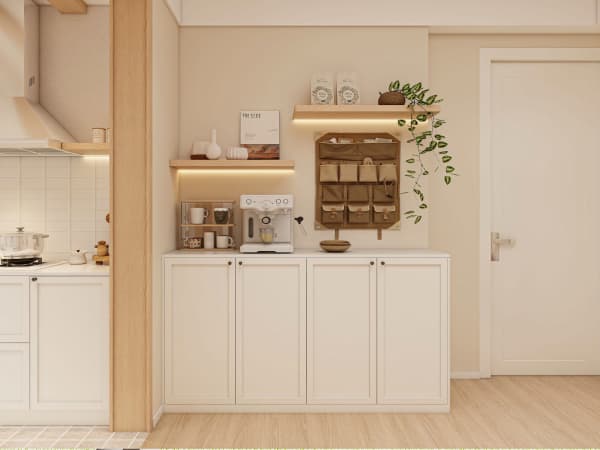
The flats in Singapore are built to a standard, but the kitchens and wardrobes inside them are anything but. Keep these points in mind, ask the right questions before you sign, and your Bathroom Vanity will lead to a home that works.
One more point worth a line: keep the contact of the person who owns your project in a single note, with the quote, the permit and the warranty. When something needs a fix in year two, that note is what turns a denied claim into a quick visit. The paper you file today is the service you get later.
A small habit that pays off is to photograph the finished work at handover, before the furniture goes in. The shots show the edges, the gaps and the mitres as they should be, and give you proof if a fault appears after. Five minutes with a phone beats a week of argument about what changed.
Think about the next owner too. A clean, compliant build with the paperwork in order sells faster and for more, because the buyer's lawyer has fewer questions. The work you do for yourself also works for the resale, so treat the records as part of the asset, not just the receipt.
Do not chase the lowest number at the cost of the details. A job that saves on the edge banding and the hinge shows it within a year, and the fix costs more than the saving. Spend on the parts you touch daily, and the home feels right long after the photos are taken.
Finally, give the build a week before you judge it. Wood settles, doors find their rest, and a small adjustment at the start of use prevents a bigger one later. A carpenter who returns for the punch-list is worth more than one who disappears the day the balance is paid.