Carpentry Materials Singapore: Smart choices that hold value
Owners who have done a Carpentry Materials in Singapore tend to agree on one thing: the part they rushed is the part they redo. Taking the time up front is the cheapest insurance in the whole project.
Common questions about hinges and soft-close fittings
Drawer runners matter as much as hinges. Full-extension runners let you reach the back without a fishing expedition, and a soft-close version protects the contents. For heavy pots, rate the runner to the load, not the catalogue minimum. A runner that sags is the sound of a job done to price.
How particle board value shape the final result
The trick with particle board is the hardware. Because the core is soft, hinges and hinges screws need the right fittings or the holes wallow out. Use screwed-in inserts rather than driving straight into the board, and the doors stay put. Most warranty claims on particle board come from bad fixing, not bad board.
Where typical carpentry budgets usually go wrong
Most owners under-budget the hidden parts. Edge banding, soft-close hinges, pull-out trays and lighting strips add 15 to 30 percent on top of the quoted carcass. Ask for these as line items, not a single round figure, so you can see where the money goes. A quote that bundles everything into one sum hides the choices you might cut.
A practical view of indoor air and board grade
Ventilation closes the gap. After install, run a fan for a week and sleep elsewhere if you can. The smell test is real: a persistent chemical tang means a board or glue below standard. Push the supplier for the cert, and if they hesitate, walk. The cheap board is never cheap once the window stays shut.
Where MDF and laminate options usually go wrong
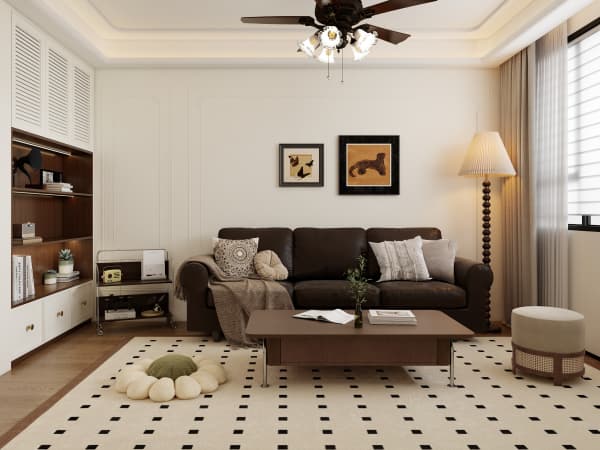
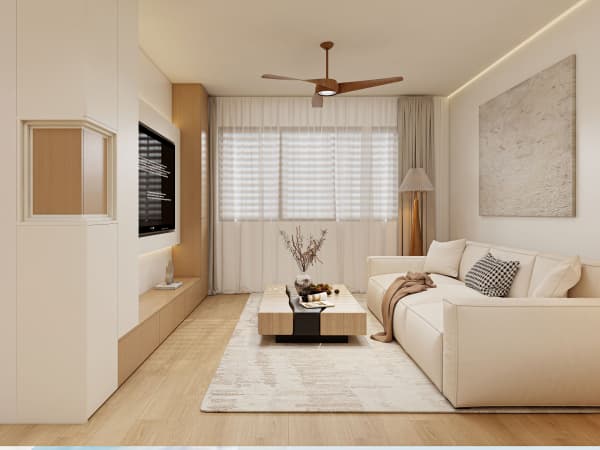
The finish matters more than the board for how a room feels. Laminates in Singapore range from matte to high-gloss, and the better ones resist scratches from keys and bags. For a TV feature wall, MDF with a textured laminate reads well and stays flat. Just keep it away from the bathroom and the kitchen splash.
The numbers matter: a a dual-key condo unit with a wet and dry kitchen and a S$45,000 cap still gets a full plywood base and soft-close fittings if the owner cuts the face-grade and keeps the inside honest. The feel stays, the cost drops.
How carpentry warranties affect your schedule
The warranty is only as good as the firm behind it. A sole proprietor who retires in two years leaves you with a paper guarantee. Prefer a registered company with a track record, and note the claim lead time. Some shops respond in days, others go quiet. A quick call to their office before you sign tells you which camp they are in.
How comparing board grades affect your schedule
Boards split by core and grade. Plywood resists water, MDF takes a smooth face, particle board is the budget base. The grade, from ENF down through E0 and E1, marks the emission, not the strength, so read both. A board database helps you match the right core to the right room without guessing.
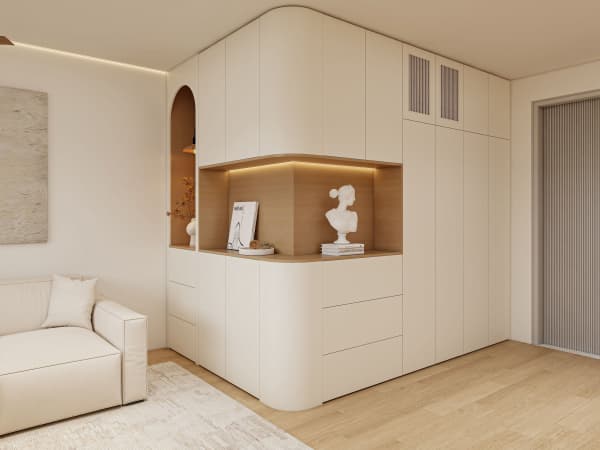
Take a compact 3-room resale as a typical case: the owner had three bedrooms to fit, and the carpenter planned the storage around the actual items rather than a standard grid, which removed the dead corners that plague smaller Singapore homes.
A practical view of custom versus ready furniture
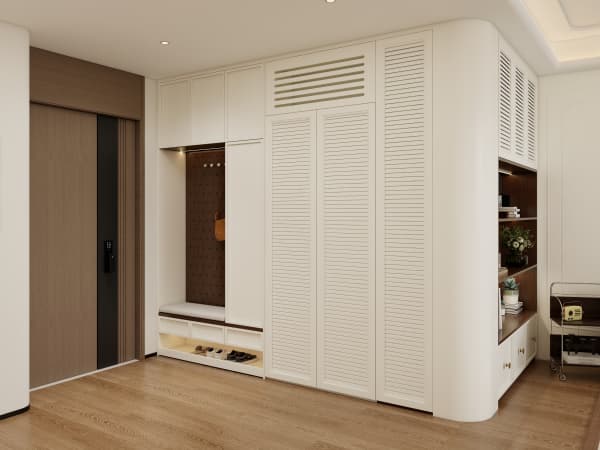
Custom beats ready when the space is odd or the need is specific. A built-in that wraps a bay window or fills a 1.2 m alcove uses space a shop piece wastes. For standard items like a bed or a side table, a bought piece often costs less and ships faster. Match the method to the gap.
Getting low-emission board choices sorted early
Green claims need proof. Some shops say 'eco' with nothing behind it. Ask for the standard and the certifying body, and write it into the quote. A serious supplier hands over the paper without a pause, and that paper is what protects your family, not the word.
Common questions about plywood for wet areas
Near the sink and the cooktop, moisture and heat decide which board survives. Plywood, made of cross-laminated veneers, holds its shape far better than particle board when it gets damp, so most carpenters use it for sink cabinets and the kickboard zone. A good birch or hardwood plywood in Singapore runs about S$6,000 to S$9,000 for a full kitchen, and it is money well spent where water sits.
A Carpentry Materials in Singapore rewards owners who measure twice and pay in stages. Plan the trades in order, choose materials for where they sit, and the build will outlast the inevitable trend that replaces it.
One more point worth a line: keep the contact of the person who owns your project in a single note, with the quote, the permit and the warranty. When something needs a fix in year two, that note is what turns a denied claim into a quick visit. The paper you file today is the service you get later.
A small habit that pays off is to photograph the finished work at handover, before the furniture goes in. The shots show the edges, the gaps and the mitres as they should be, and give you proof if a fault appears after. Five minutes with a phone beats a week of argument about what changed.
Think about the next owner too. A clean, compliant build with the paperwork in order sells faster and for more, because the buyer's lawyer has fewer questions. The work you do for yourself also works for the resale, so treat the records as part of the asset, not just the receipt.
Do not chase the lowest number at the cost of the details. A job that saves on the edge banding and the hinge shows it within a year, and the fix costs more than the saving. Spend on the parts you touch daily, and the home feels right long after the photos are taken.
Finally, give the build a week before you judge it. Wood settles, doors find their rest, and a small adjustment at the start of use prevents a bigger one later. A carpenter who returns for the punch-list is worth more than one who disappears the day the balance is paid.