Carpentry Quotation Singapore: Better ideas that fit
For a Carpentry Quotation in Singapore, the budget is only half the story. The other half is the permit, the timeline and the people you hire, and those three decide whether the home feels right a year on.
Getting typical carpentry budgets sorted early
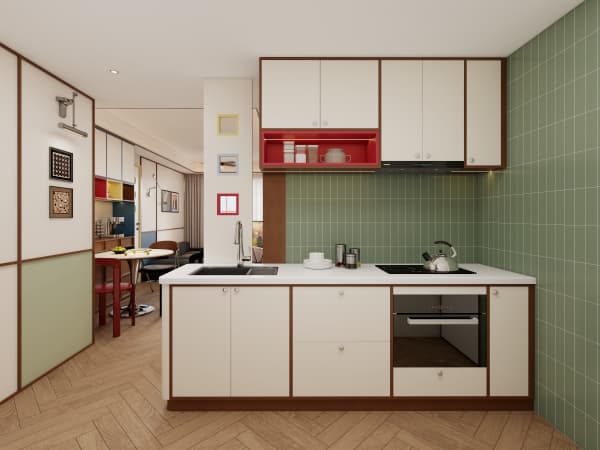
Carpentry in a Singapore home spans a wide range. A basic kitchen and a couple of wardrobes can land at S$8,000 to S$12,000, while a full-home build with plywood, soft-close hardware and a feature wall often reaches S$25,000 to S$40,000. The board grade and the amount of custom work move the number more than the room count.
How renovation stages in order shape the final result
Renovation is a relay, not a race. Hack first, then the wet trades tile and screed, then electrical and plumbing first-fix, then paint, then the carpenter measures and builds, then the second fix and the clean. Each stage blocks the next, so a delay at the front echoes to the end. A clear schedule keeps the chain moving.
Common questions about checking for defects
Edges reveal the build. A laminate that lifts at the corner, a mitre that does not meet, a panel with a chip at the kickboard, these are the tells. A careful carpenter fixes them before you see them; a rushed one hopes you will not. The check is your proof either way.
What measuring for accuracy cost you in the end
Paper the measure with photos. A shot of the odd corner, the pipe location and the beam saves a return trip. Most misfits trace to a corner nobody wrote down. A five-minute photo set at measure time is cheaper than a rebuild panel later.
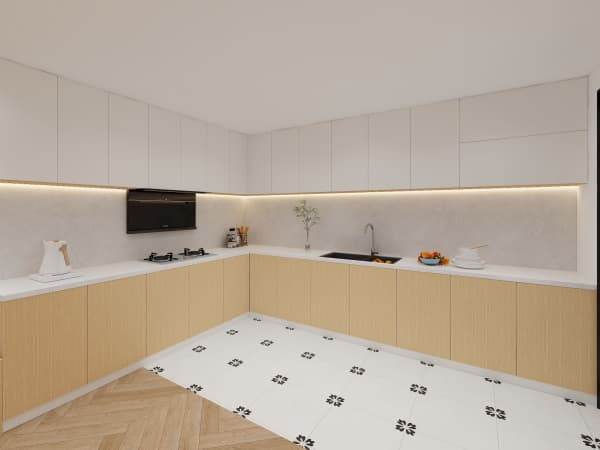
In Punggol, a a maisonette often comes with an awkward service yard, and the build that works treats it as a second kitchen rather than a dump. A S$28,000 budget stretches further when the yard pulls its weight.
How carpentry warranties affect your schedule
A carpentry warranty in Singapore typically runs one to five years, with the better shops giving three. Read what it covers: warping, delamination and faulty hinges are fair game, but water damage from a leaking pipe is usually on you. Get the coverage and the claim process in writing, because a verbal promise fades by the time something breaks.
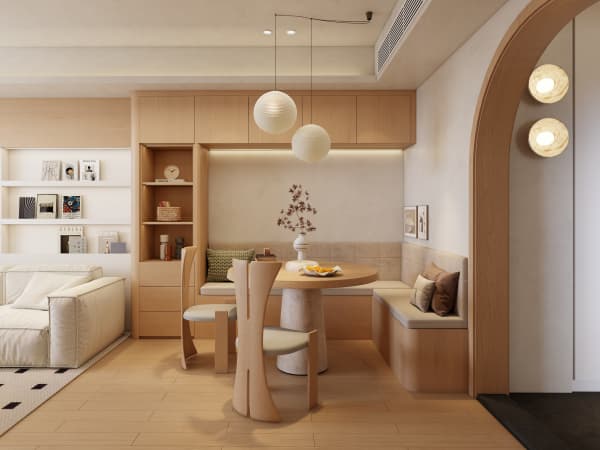
Take a dual-key condo unit as a typical case: the owner had a helper room to fit, and the carpenter planned the storage around the actual items rather than a standard grid, which removed the dead corners that plague smaller Singapore homes.
Common questions about payment milestone schedules
Never pay in full up front. A fair schedule runs a deposit of 20 to 30 percent, a progress payment after the carcass, and the balance on completion and defect clearance. Tie each payment to a visible stage so you keep room to flag faults before the money leaves your hands.
Where custom versus ready furniture usually go wrong
Custom beats ready when the space is odd or the need is specific. A built-in that wraps a bay window or fills a 1.2 m alcove uses space a shop piece wastes. For standard items like a bed or a side table, a bought piece often costs less and ships faster. Match the method to the gap.
How reading a quotation shape the final result
Watch the variation clauses. A quote at S$15,000 that becomes S$22,000 after 'unforeseen' items hurts more than a S$19,000 firm quote. Ask what triggers a variation and cap it in writing. Most reasonable carpenters will agree to a 10 percent ceiling if you ask before signing.
How choosing a contractor affect your schedule
The site visit tells you more than the portfolio. Look at the edge banding, the gap at the worktop, the soft-close feel. A neat sample board means little; a finished home with clean mitres means everything. Bring a level if you can, and run a drawer to hear the close.
What particle board value cost you in the end
Particle board, sometimes called chipboard, is the budget workhorse of local carpentry. For dry storage like a wardrobe or a study nook, a branded particle board with a thick laminate lasts years and costs roughly S$3,000 to S$6,000 for a typical run. It is heavier than plywood and weaker at the edge, but for a closed cabinet it does the job.
The flats in Singapore are built to a standard, but the kitchens and wardrobes inside them are anything but. Keep these points in mind, ask the right questions before you sign, and your Carpentry Quotation will lead to a home that works.
One more point worth a line: keep the contact of the person who owns your project in a single note, with the quote, the permit and the warranty. When something needs a fix in year two, that note is what turns a denied claim into a quick visit. The paper you file today is the service you get later.
A small habit that pays off is to photograph the finished work at handover, before the furniture goes in. The shots show the edges, the gaps and the mitres as they should be, and give you proof if a fault appears after. Five minutes with a phone beats a week of argument about what changed.
Think about the next owner too. A clean, compliant build with the paperwork in order sells faster and for more, because the buyer's lawyer has fewer questions. The work you do for yourself also works for the resale, so treat the records as part of the asset, not just the receipt.
Do not chase the lowest number at the cost of the details. A job that saves on the edge banding and the hinge shows it within a year, and the fix costs more than the saving. Spend on the parts you touch daily, and the home feels right long after the photos are taken.
Finally, give the build a week before you judge it. Wood settles, doors find their rest, and a small adjustment at the start of use prevents a bigger one later. A carpenter who returns for the punch-list is worth more than one who disappears the day the balance is paid.
Match the build to how you actually live, not to a showroom you visited once. The kitchen you cook in and the wardrobe you open daily should reflect your routine, because a home that fits your habits is the one you stop noticing, and that is the highest praise a renovation can earn.