Carpentry Quotation Singapore: Starting in Jurong East
A Carpentry Quotation in Singapore is not a single purchase but a sequence of choices. Each choice locks the next, so the owners who plan the chain end up with a home that quietly does its job every day.
Understanding reading a quotation in Singapore
Compare quotes by line, not by total. One firm may price the carcass low and the drawers high, another the reverse. The honest way is to send the same spec to two or three and see where they differ. Wild gaps usually mean a different board or a missing step, not a better deal.
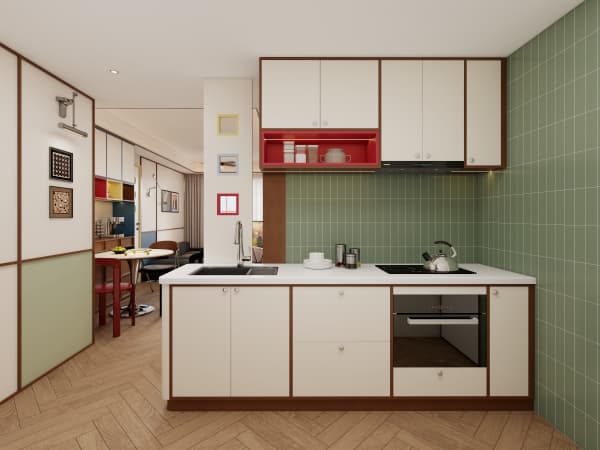
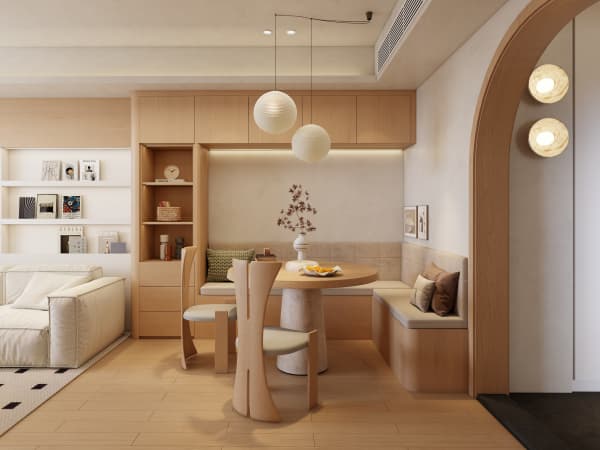
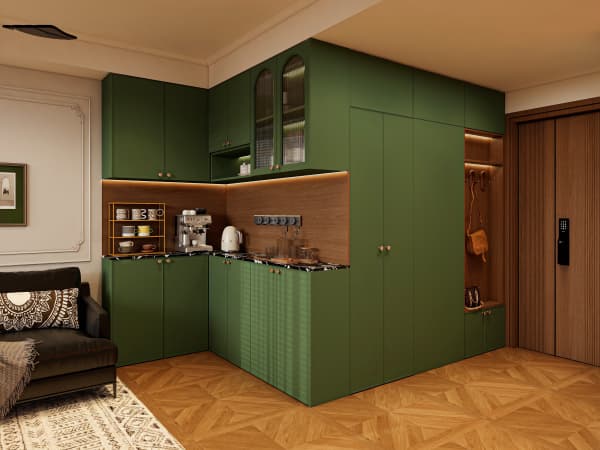
Take a dual-key condo unit as a typical case: the owner had a home office nook to fit, and the carpenter planned the storage around the actual items rather than a standard grid, which removed the dead corners that plague smaller Singapore homes.
What checking for defects cost you in the end
Edges reveal the build. A laminate that lifts at the corner, a mitre that does not meet, a panel with a chip at the kickboard, these are the tells. A careful carpenter fixes them before you see them; a rushed one hopes you will not. The check is your proof either way.
How payment milestone schedules affect your schedule
The deposit protects the workshop from a no-show, but anything above 50 percent before you see work is a risk. In Singapore, disputes over renovation deposits are common, so keep records of every transfer and the stage it covered. A written schedule with amounts removes the grey area.
How typical carpentry budgets shape the final result
Carpentry in a Singapore home spans a wide range. A basic kitchen and a couple of wardrobes can land at S$8,000 to S$12,000, while a full-home build with plywood, soft-close hardware and a feature wall often reaches S$25,000 to S$40,000. The board grade and the amount of custom work move the number more than the room count.
A practical view of custom versus ready furniture
Custom beats ready when the space is odd or the need is specific. A built-in that wraps a bay window or fills a 1.2 m alcove uses space a shop piece wastes. For standard items like a bed or a side table, a bought piece often costs less and ships faster. Match the method to the gap.
Where particle board value usually go wrong
Particle board, sometimes called chipboard, is the budget workhorse of local carpentry. For dry storage like a wardrobe or a study nook, a branded particle board with a thick laminate lasts years and costs roughly S$3,000 to S$6,000 for a typical run. It is heavier than plywood and weaker at the edge, but for a closed cabinet it does the job.
Getting measuring for accuracy sorted early
Bring the floor finish into the measure. Tiles add 10 to 15 mm, a screed more. If the carpenter measures before tiling, the kickboard floats and the doors drag. Lock the floor height first, then measure, and the install meets the ground clean.
Getting carpentry warranties sorted early
A carpentry warranty in Singapore typically runs one to five years, with the better shops giving three. Read what it covers: warping, delamination and faulty hinges are fair game, but water damage from a leaking pipe is usually on you. Get the coverage and the claim process in writing, because a verbal promise fades by the time something breaks.
How choosing a contractor affect your schedule
Pick a contractor on evidence, not a flyer. Ask for two recent jobs you can visit, check the warranty terms, and read the contract for the payment schedule. In Singapore, a registered firm with a showroom is easier to hold accountable than a one-man team you found on a messaging app.
Take a dual-key condo unit as a typical case: the owner had an open living-dining area to fit, and the carpenter planned the storage around the actual items rather than a standard grid, which removed the dead corners that plague smaller Singapore homes.
Common questions about renovation stages in order
Hold a weekly site check at each handover. When the tiler leaves, walk the floor for hollow tiles. When the painter leaves, check the edges. Catching a fault before the next trade covers it saves a fight later. The stage checks are the cheapest insurance in the whole job.
Good carpentry for a Carpentry Quotation in Singapore is the kind you stop noticing because nothing goes wrong. Treat the build as a system rather than a set of cabinets, and the result earns its place in your home.
One more point worth a line: keep the contact of the person who owns your project in a single note, with the quote, the permit and the warranty. When something needs a fix in year two, that note is what turns a denied claim into a quick visit. The paper you file today is the service you get later.
A small habit that pays off is to photograph the finished work at handover, before the furniture goes in. The shots show the edges, the gaps and the mitres as they should be, and give you proof if a fault appears after. Five minutes with a phone beats a week of argument about what changed.
Think about the next owner too. A clean, compliant build with the paperwork in order sells faster and for more, because the buyer's lawyer has fewer questions. The work you do for yourself also works for the resale, so treat the records as part of the asset, not just the receipt.
Do not chase the lowest number at the cost of the details. A job that saves on the edge banding and the hinge shows it within a year, and the fix costs more than the saving. Spend on the parts you touch daily, and the home feels right long after the photos are taken.
Finally, give the build a week before you judge it. Wood settles, doors find their rest, and a small adjustment at the start of use prevents a bigger one later. A carpenter who returns for the punch-list is worth more than one who disappears the day the balance is paid.
Match the build to how you actually live, not to a showroom you visited once. The kitchen you cook in and the wardrobe you open daily should reflect your routine, because a home that fits your habits is the one you stop noticing, and that is the highest praise a renovation can earn.