Custom Furniture at shophouse: A Board Game Vault
In a conservation shophouse, Custom Furniture has to work around the building rather than through it, which is why a board game vault suits it. It is a deep, ventilated cabinet against a wall, needs no structural work, and uses the one thing a shophouse has: height.
Board games are demanding to store: cardboard boxes of wildly inconsistent sizes, heavy when stacked, and vulnerable to the two things a shophouse has plenty of, humidity and silverfish.
Shophouse conditions break most standard assumptions
A conservation shophouse is nothing like a flat: ground-floor ceilings often run 3.6 to 4.5 metres, floors may be original timber joists, party walls are shared, and the rear often has a rain-bringing airwell.
Each changes the joinery: tall ceilings beat an HDB flat of roughly 90 to 110 sqm with 2.6m ceilings, timber floors demand load spread, party walls make drilling a neighbour issue, and an airwell means uneven humidity.
Sizing a cabinet to the boxes you own
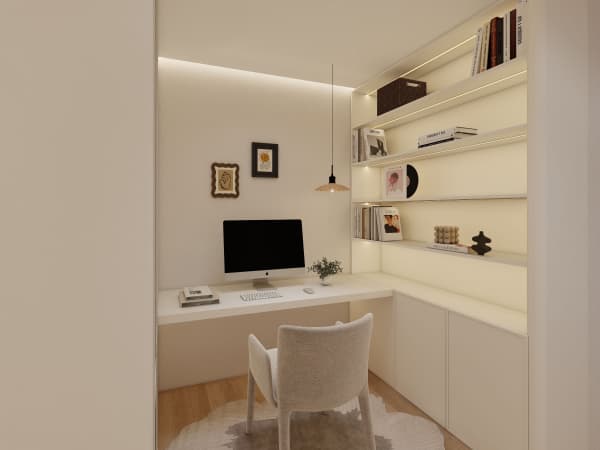
Game boxes cluster around a few formats, and shelving that ignores this wastes a third of the volume:
- Large square boxes are around 300 x 300mm, so a 320–340mm shelf depth holds them.
- Standard rectangular boxes are around 300 x 220mm and store sideways on the same depth.
- Shelf pitch of 130–150mm suits games flat in stacks; 300–330mm suits vertical spine storage.
- Store heavy boxes flat, light ones upright, or heavy spines will bow over years.
- Keep shelf spans under 800mm without support, or a loaded plywood shelf sags.
Adjustable shelves matter more here than in almost any cabinet, because the collection changes; ask for a full row of shelf-pin holes rather than three fixed positions.
Humidity, silverfish and cardboard
Singapore's humidity stays high year-round, and an older building without air-conditioning runs higher still near an airwell. Cardboard absorbs it, warps, then attracts silverfish, which eat paper and the starch in glue.
The countermeasures: keep the base at least 100mm off the floor, leave 30 to 50mm behind the cabinet, fit doors but ventilate through slots, and place a dehumidifier canister where you will check it. Avoid mothballs; they leave a permanent odour in cardboard.
Custom Furniture that respects a conservation shell
Conservation shophouses carry real constraints. The front façade and often the timber staircase, airwell and roof form are protected and need approval from the relevant authority first. Structural alterations, rear changes and party-wall work are not for a carpenter on site.
Freestanding or lightly fixed joinery is the right answer. Build it as a self-supporting cabinet with a levelling base, restrained at the top with a bracket rather than bolted through a heritage wall. Keep clear of original plaster and timber pilasters; on original timber floors, spread the load with a continuous plinth across the joists.
Material is straightforward: moisture-resistant plywood for the carcass beats MDF, which swells once wet. MDF is acceptable for sprayed door fronts on a dry upper floor. Solid timber suits the frame and original joinery better than laminate.
Approvals, height and a realistic timeline
Shophouse projects run slower than flat renovations, and paperwork drives much of that. Clarify what is conserved before design begins; freestanding furniture sidesteps most of it. In a 4-metre room, build to the ceiling but accept the top third holds games played once a year unless you fit a ladder, and add a warm 3000K LED strip behind the front rail so spines stay readable.
Carpentry takes six to ten weeks from drawings to installation, though a tall cabinet for a narrow staircase may need building in sections on site. Whole-home budgets commonly run S$30,000 to S$70,000, and shophouses sit at the upper end. A one-year defect warranty is standard; watch for movement, since a tall cabinet on timber floors will settle and doors may need an adjustment, and check the back at month three.