Custom Furniture at storeroom: Japandi in the Local Flat
Custom Furniture at the storeroom is where the Japandi look really earns its keep, because the style's low, calm lines turn a messy bomb shelter into a space you don't mind leaving open. In a local HDB 5-room of about 110sqm, the storeroom is often the only room with no fixed layout, so building it to suit you makes sense.
What Japandi means for a small storeroom
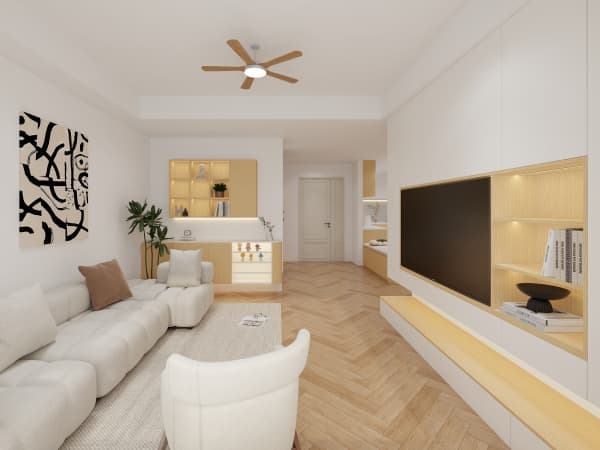
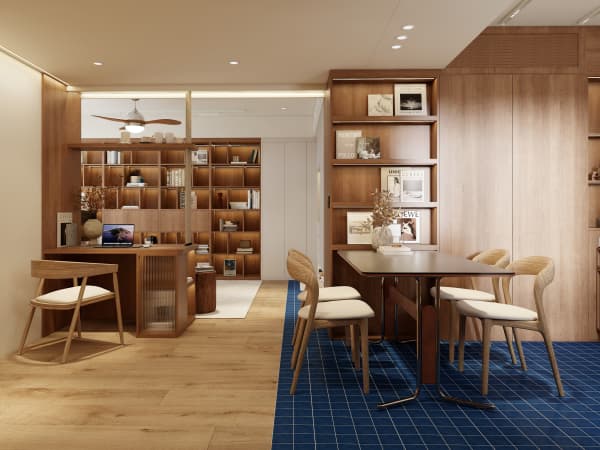
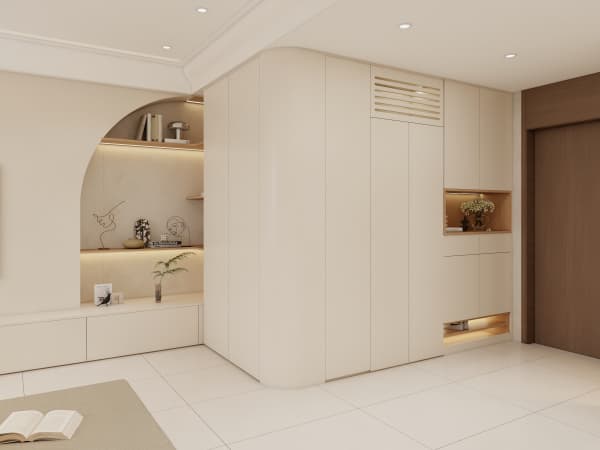
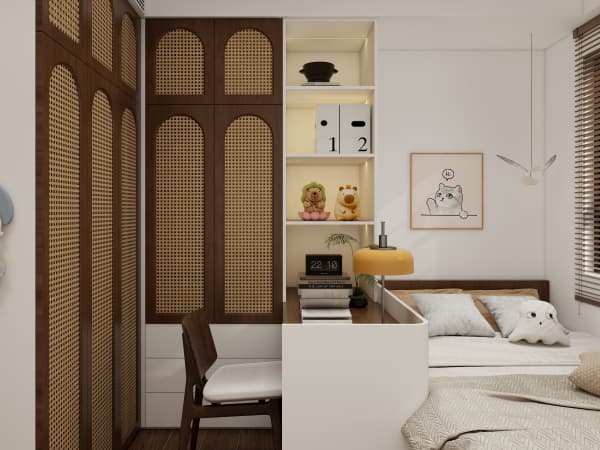
Japandi is the mix of Japanese restraint and Scandinavian warmth: pale wood, soft closes, and very little hardware on show. For a storeroom it means floor-to-ceiling shelves in light oak-look laminate, a couple of drawers with no handles, and open bays you can fill with baskets.
The point isn't to show off. It's to make a room where everything has a home and the eye rests. I've fitted this for a family in Yishun whose storeroom used to be a pile of cartons, and now it reads like a tidy larder when the door is left ajar.
Keep the palette tight. One wood tone, one neutral for the backs, and that's it. Adding a third colour is what tips a calm room into a busy one, and you won't notice it until the clutter creeps back.
Materials that suit our climate
For the carcasses, plywood with a laminate skin is the safe pick. It holds its shape through the wet months and shrugs off the occasional damp shoe or wet umbrella. Solid wood looks lovely but the storeroom's temperature swings near the bomb shelter door can make it move.
MDF is fine for the drawer fronts if they're laminated, but avoid it anywhere a leak could reach. Laminate surfaces take a beating and clean with a quick wipe, which matters in a room you raid for cables and tools.
Cost, timeline, and the build
A full Japandi storeroom fit for a standard HDB bomb shelter runs roughly S$1,200 to S$2,800 depending on height and the number of drawers. That's a small slice of a renovation budget that averages S$30k to S$70k for a resale flat.
From measure to install, plan for about 6 to 10 weeks. The maker surveys the odd angles of the storeroom (they're rarely square), cuts in the workshop, and assembles on site in a day or two. Tell them early if you want the back panel to hide the electrical meter, since that needs a cut-out.
Keeping it tidy and the resale angle
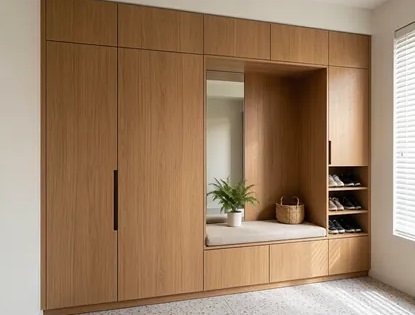
Maintenance is just a wipe-down every couple of months and checking the soft-close hinges haven't loosened. Baskets do the heavy lifting for the messy stuff, so the shelves stay clean even when life isn't.
For resale, a finished storeroom helps more than people expect. Buyers in Singapore love storage, and a calm, built-in fit reads as "well looked after" the moment they open the door. It won't add S$10k to your price, but it removes a reason for someone to lowball you.
If you're in a condo, the MCST normally won't care about internal storeroom fittings, but check before you bolt anything to a wall that backs onto a neighbour. In an HDB flat the one-year defect liability period covers cracks from the original build, so note any before you fit out. Japandi in the storeroom is a quiet upgrade, but it's one of the few that you feel every time you open the door.