Custom Furniture by headboard: A Wine Wall That Chills
Custom Furniture by the headboard earns its keep when it wraps the bed and hides a slim wine wall, because a made-to-measure headboard cabinet turns dead wall space into a chilled, display-ready wine nook without eating bedroom floor area — and in a Singapore home where the bedroom is often the only quiet spot, that beats a freestanding rack every time.
Where Custom Furniture Meets the Bedroom Wall
A off-the-shelf headboard is a padded board you bolt on and forget. A custom headboard is carpentry that runs from floor to roughly 2.1 metres, framing the bed like a built-in, with the space behind it doing real work: a shallow shelf for the phone and the eye mask, a recess for the blackout curtain track, and — the fun part — a chilled column for wine. Because the cabinet is made to your bed width, a super single, queen or king all get a seamless fit with no gap that collects dust or stray socks.
The wine wall sits inside this run as a ventilated cavity holding a compressor wine fridge, typically 15 to 40 bottles, set behind a tinted glass door so the labels show. You are not building a cellar; you are building a two-degree-cool corner that keeps your weekday reds and whites at drinking temperature without a separate appliance cluttering the living room.
Making the wine fridge actually chill, not sweat
A compressor wine fridge breathes. It pulls air in the back and pushes warm air out, and if your carpenter boxes it in with no gap, it overheats and dies in a Singapore summer. Leave at least 5 centimetres of clearance behind and 3 centimetres above the unit, and route a small vent grille to the room. Skip the thermoelectric "silent" fridges for anything above 20 bottles — they struggle once the ambient hits 30 degrees, which is most afternoons here.
Power is the next check. A wine fridge draws 80 to 150 watts; harmless on its own, but a BTO bedroom circuit already carries the air-con, the chargers and the fan. Ask your electrician to confirm the point load rather than assuming. In a condo the MCST will not care about a bedroom fridge, but they will care if you drill into the shared wall to run a cable, so keep all works inside your own unit.
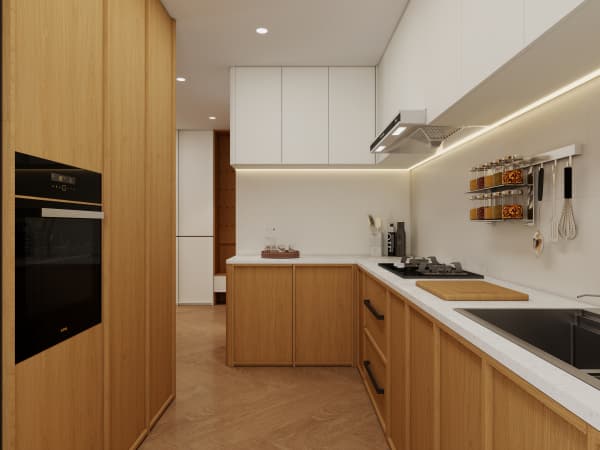
- Pick a compressor unit sized to your real habit, not your ambition.
- Vent the back; a sealed cavity cooks the compressor.
- Put the fridge on its own socket off the air-con loop if possible.
Materials and the sleep test
Indoors, MDF is fine for a headboard carcass — it is flat, stable and cheap, roughly S$60 to S$90 per square foot run, and it takes laminate or veneer cleanly. Upgrade to plywood only if the cabinet also hides plumbing or sits near a bathroom wall where damp could creep. The front face is where you spend: a fabric-upholstered panel softens the room, while a wood or lacquer panel reads more hotel-like and wipes clean of mosquito-coil marks.
One thing flat-pack never considers: vibration. A wine fridge hums and the compressor kicks with a faint thud. Mount the cabinet with a small acoustic gap from the wall and put the fridge on rubber feet, or you will feel every cooling cycle through the bedframe at 2am. Test the unit on the floor for a night before the carpenter fixes it in.
Proportion and the look that lasts
A wine wall that is taller than the headboard looks like a vending machine; one that is narrower than the bed looks like an afterthought. The pleasing ratio is a chilled column roughly 40 to 60 centimetres wide centred or offset on the bed, with the headboard wrapping it by 20 centimetres each side. Light it with a low-warm LED strip on a sensor, not a spotlight — you want the bottles to glow, not the room to flood.
Done well, the headboard stops being a board and becomes the bedroom's quiet centrepiece: a place to charge, to read, and to pull a chilled glass without leaving the sheet. Measure the fridge before the wood, vent it, and let the cabinet hide the rest.