Custom Furniture by sideboard: A Meds Cabinet That Locks
Custom Furniture beside a dining sideboard should hide a locked meds cabinet inside the same carcass, because prescription and household medicines in a Singapore home with kids or elderly parents need a key, not a click, and a false-drawer front keeps it invisible to anyone who should not be opening it. In a compact HDB the sideboard doubles as the medicine and document spot, so build the lock in from the start.
Custom Furniture by the sideboard should lock before it looks good
The case for locking is plain. Paracetamol, iron tablets, and anything on a prescription sit in most sideboards, and the Poisons Act expects controlled items to be kept safe; a toddler who finds a strip of pills is a trip to KKH no parent wants. A cam lock or a small keyed latch inside one of the sideboard's own drawers turns the piece into a compliant store without a clinical white box on the wall. Pick a drawer that is not the obvious one, the second from top maybe, and face it with the same veneer so the lock is the only tell.
Go keyed rather than just magnetic if the user is a child, because a magnetic catch is a puzzle a curious eight-year-old solves in an afternoon. For elderly care, a key can be a burden, so a coded push-latch or a discreet key hook on the back of the unit works better than hiding the only key.
Where the sideboard sits and what goes behind the lock
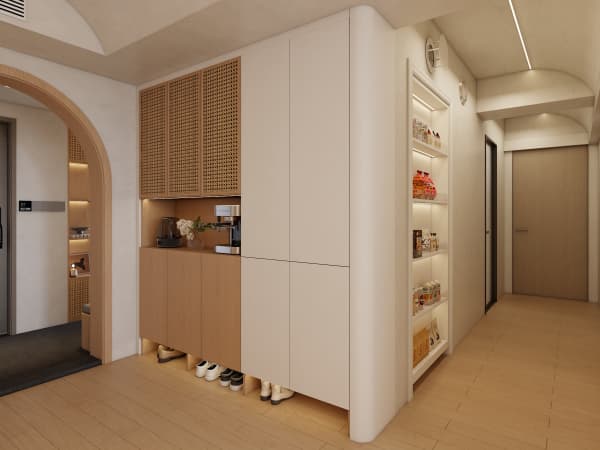
In a 4-room HDB the sideboard lives against the dining wall, roughly 1.2 to 1.8 m long, and the locked bay wants the coolest, driest section, away from the kitchen heat and the window sun that ages medicine. Use the left or right end bay, not the centre, so the lock hardware does not fight the doors you open daily. Line that bay with MR plywood even if the rest is MDF, because Singapore humidity and a spilled syrup bottle are a constant risk.
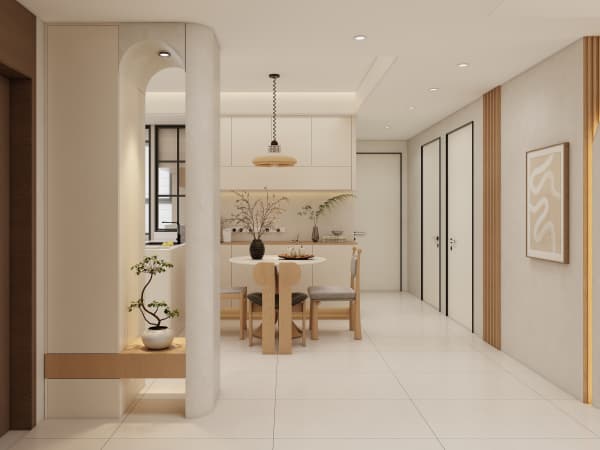
What goes in: prescription refills, the first-aid kit, the thermometer, and the one drawer of do-not-touch for visitors. Keep a small labelled insert so the person who holds the key can find things fast during a fever at 2 am. A locked bay 30 cm wide by 40 cm deep holds a family's medical life without showing it.
Hardware, budget and the warranty that matters
A cam lock costs a few dollars; a coded latch runs S$40 to S$120 fitted. The carpentry to carve a hidden bay inside a sideboard adds maybe S$150 to S$400 depending on the false front and the liner, small against a sideboard that itself runs S$800 to S$2,000. Spell out in the quote that the bay is MR plywood, the lock is keyed, and the false front aligns with the rest, because a mismatch in the grain is the one thing a guest will notice.
Whole-home custom budgets in an HDB sit around S$30k to S$70k by scope, and a locked meds bay is a minor, high-value line. The one-year defect warranty should cover the lock mechanism as a moving part, so confirm the carpenter treats it as hardware, not finished goods, when something sticks after six months.
Put the lock in the brief, not the punch list, and the sideboard does double duty without looking like a clinic. The medicine stays put, the kids stay safe, and the dining wall keeps its calm line.