Custom Furniture for bar counter: A Iron Board That Folds
Custom Furniture for a bar counter can quietly absorb an ironing board that folds away, giving a small Singapore home one less bulky appliance hogging a cupboard. When the bar lines the dining wall of a 4-room BTO, a hidden fold-down board means you press shirts right where the steam can clear into the open living area, then tuck it back so guests never see the chore. It is the kind of build that earns its keep weekly.
Why the bar counter is a smart ironing hideaway
Most ironing boards end up leaning in the bomb shelter or wedged behind the kitchen door, and the good ones are 1.2 metres of awkward steel you trip over daily. A bar counter is usually 450 to 600mm deep and runs along a wall with nothing behind it but plasterboard or a service void — perfect to recess a fold-down leaf. You stand at a comfortable height, the living room fan pulls the steam away, and when the shirt is done the board flips up flush into the cabinet face. Guests see a clean bar; you see a chore erased.
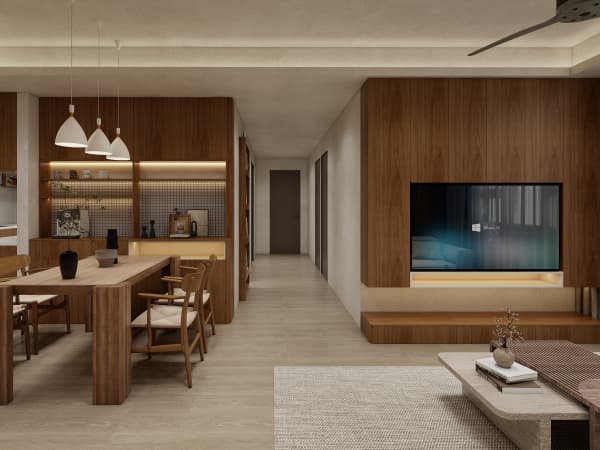
The bar also tends to sit near a power point for the wine fridge or lighting, so the iron plugs in without a long extension across the floor — a small safety win in a home with kids.
Custom Furniture: Hiding the Board in Plain Sight
The fold is a hinge-rated leaf backed by a 18mm plywood panel that drops to about 850mm from the floor — standard ironing height — and locks with a small dual-catch so it never drops on its own. Size the leaf to 320 by 1,100mm, enough for a shirt but slim enough to vanish into the bar's end panel. Face it in the same laminate as the counter so the closed board reads as a cabinet door, not a secret.
Behind the leaf, build a shallow recess with a heat-proof back — a solid-surface or aluminium sheet rather than bare wood — because the iron sits hot an inch from the surface. A small vent gap at the top lets heat escape so the cabinet does not cook itself during a long pressing session.
Heat, steam, and the materials that cope
Steam is the enemy of ordinary carpentry, so the recess and the leaf edge need moisture-proof treatment. Use phenolic-edged plywood or a laminate with PVC banding on the leaf, and seal the underside where condensation gathers. The iron rest should be a metal or silicone pad rated for 200 degrees, not a timber ledge that will scorch.
Also plan the cable. A retractable power reel inside the cabinet keeps the cord off the floor, and a thermal cut-out on the socket adds peace of mind if the iron is left on. These details separate a build that lasts from one that warps after three washes.
A fold-away ironing board in the bar counter is the sort of quiet upgrade that makes a small flat feel larger. Hide it well, build it heat-proof, and the chore stays out of sight until the moment you actually need it — which is exactly how good custom work should feel.
What it costs and how long it takes
In Singapore, a recessed fold-down ironing station built into an existing bar run typically adds roughly S$400 to S$900 to the carpentry quote, depending on the hinge hardware, the heat-proof backing, and whether the cabinet needs a new power point pulled to the spot. Lead time is usually absorbed into the main carpentry schedule of 6 to 10 weeks rather than billed separately, so there is no extra waiting window. Ask the carpenter to mock up the leaf swing during the first site measurement so the recess clears the skirting and any cornice line — a 20-minute check at the start prevents a costly re-cut later. If you already have a freestanding board you like, the build can be sized around it instead of buying new hardware, which keeps the budget at the lower end.