Custom Furniture for pantry: A Finish That Wipes Clean
Custom Furniture for a pantry lives or dies by one test — the finish has to wipe clean after a turmeric spill, a leaking oil bottle, or a kid's jam handprint. The smart pick is a closed-pore surface like acrylic or high-pressure laminate, because both take a damp cloth without soaking the stain into the grain the way wood veneer does.
Why Custom Furniture finish choice beats colour in a pantry
People walk into a pantry meeting fixated on the door colour and forget the finish is what they will touch every day. Acrylic fronts give a gloss that wipes with a single swipe and hides nothing, which is honest — you see the smear and you clean it. Laminate is the workhorse: cheaper than acrylic, available in matte and wood-look, and closed enough to resist most stains if you catch them the same day. Solid wood looks warm but its open grain traps oil and warps near the kettle, so keep it out of a pantry that sits by the yard.
Edge banding is the detail that fails first. A pantry door opened fifty times a week lets moisture creep under a poorly glued edge, and within a year the board puffs at the corner. Ask for PVC or acrylic edge banding, not the thin paper tape, and run your nail along the edge when you inspect the sample. If it lifts, reject it.
Handles are where grime collects. Push-to-open doors with no visible grip are the easiest to keep clean because there is no crevice for oil to settle. If you want a handle, pick a recessed channel you can run a cloth through rather than a knob with a screw cap that loosens and spins.
Laying out a pantry that fits a 5-room HDB
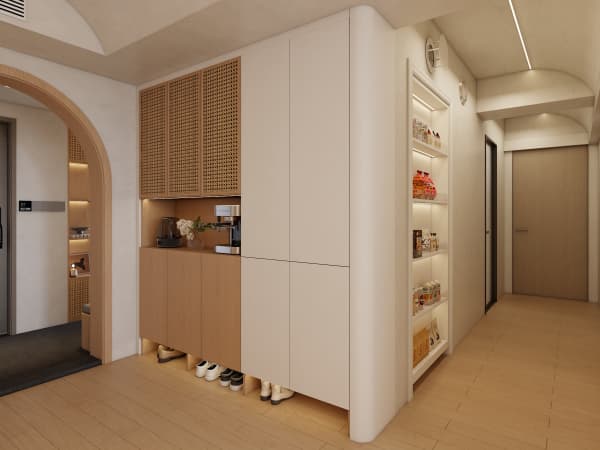
A 5-room HDB is roughly 110 sqm, and the pantry is often carved from the kitchen extension or a slice of the utility area. The usable depth is usually 350mm to 450mm of shelving, which fits most jars and the tall cereal boxes if you turn them. Go deeper than 500mm and the back row becomes the lost zone nobody reaches.
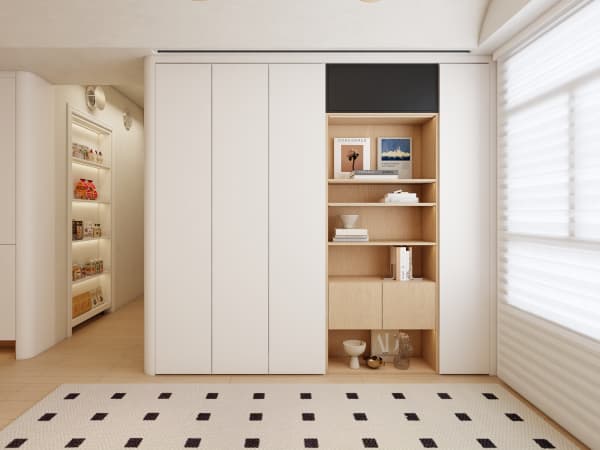
Split the height into three bands. Floor to 400mm for heavy appliances and the rice tub; 400mm to 1,600mm for the everyday jars at eye and hand level; above 1,600mm for the once-a-month stuff like festive tins. Adjustable shelves beat fixed ones because your grocery haul changes and you will want to reshuffle.
If the pantry backs onto the bomb shelter or a service wall, keep the unit freestanding or on a plinth, not screwed into the protected surface. A rolling pantry cabinet on castors is a legit option in tight condos where the MCST frowns on fixed carpentry near the yard.
Humidity, pests and the wipe-down habit
Singapore humidity sits around 80% for half the year, and a pantry by the open kitchen picks up cooking steam. Closed-pore finishes shrug this off, but the carcass inside still needs ventilation — leave a 10mm gap at the back or spec a vented panel so trapped air does not grow mould behind the doors. We have opened enough sealed pantries to know the back panel is where the trouble starts.
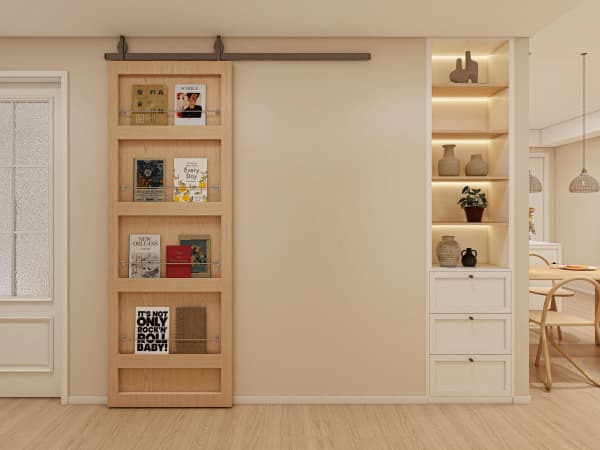
Cockroaches love a greasy shelf, so a wipe-clean finish is also a pest defence. A weekly once-over with a damp microfibre cloth takes two minutes and removes the scent trails they follow. Matte laminate shows less fingermark than gloss, which is why some owners pick matte for the lower doors and gloss only up high where nobody touches.
One more habit: keep the kickboard removable. The 100mm gap under the cabinet is where dropped lentils and the occasional gecko end up, and a clip-on plinth lets you pull it off and sweep without moving the whole pantry. Small detail, big difference over five years.
Choose the finish you can clean in one pass, set the shelves to your real groceries, and the pantry stops being a chore. A wipe-clean pantry is the kind you actually keep tidy, and that is the only kind worth building.