Custom Furniture for shelf: A Hat and Bag Ledge
For a tidy Singapore entrance, Custom Furniture builds a hat and bag ledge as a slim, lip-edged shelf at the height you actually reach, so caps, totes, and the grab-and-go bag get a home instead of the floor. In a typical flat the spot by the door is narrow, so a shallow 15 to 20 centimetre ledge holds daily essentials without blocking the walkway. Fixed to the wall with a small rail, it keeps the day's things visible and off the shoe cabinet.
Height and Depth That Actually Get Used
A ledge only works if you can reach it without thinking. For an adult, that means around 1.5 to 1.6 metres from the floor, at chest-to-eye level where you'd naturally drop a cap. Make it too high and it becomes a display shelf for things no one touches; too low and it collides with the shoe cabinet or a passing shoulder. Depth of 15 to 20 centimetres is enough for a folded tote and a couple of caps turned brim-out, and it keeps the ledge inside the door swing rather than protruding into the corridor. The lip at the front, a small 1 centimetre raised edge, stops a bag strap from sliding off without looking like a barrier.
In a home with kids, add a second lower ledge at about 1.1 metres for their school caps and water bottle, so the morning scramble has a designated drop. Two slim ledges beat one thick shelf because each stays within easy reach of the person using it.
Why Custom Furniture Sizes the Ledge to Your Daily Grab-and-Go
Store shelves come in fixed widths and a single finish, so they either leave a gap beside the door or jut past it. Custom Furniture measures the exact wall between the entrance and the first obstacle, usually the bomb shelter door or the switch panel, and fills it edge to edge with a ledge that looks intentional. You also choose the rail: a row of small hooks under the ledge for keys and lanyards, or a continuous wood rail for bags to hook by their straps. Those small decisions are what make the ledge fit your routine rather than fight it.
The finish is the other reason to build rather than buy. A ledge can match your shoe cabinet laminate so the entrance reads as one design, or contrast in a warm timber to soften a tiled wall. Either way the joinery lines up with the existing carpentry, which a screwed-on shelf never quite does.
Material and the Rail That Holds the Load
Use a sealed ply or a PVC-edged board for the ledge so the edge doesn't swell from the occasional wet umbrella leaned against it. A solid timber lip looks best but needs a wipe if it gets rained on; a laminate lip is more forgiving for a busy entrance. Under the ledge, a metal rail rated for a few kilograms of bags is worth the small cost, and keep the screws into wall anchors, not just the plaster, because a loaded bag pulls downward and outward. If the entrance is the bomb shelter wall, anchors go into the RC around the door frame, never into the shelter panel itself.
Where the Ledge Pays Off Beyond the Door
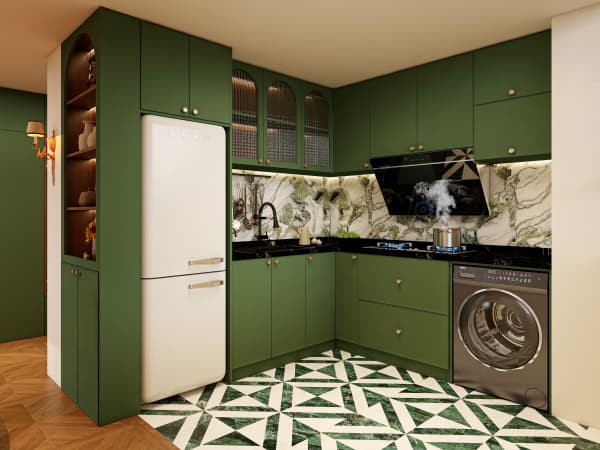
The hat and bag ledge isn't only an entrance idea. Inside the bedroom, a shallow ledge above the dresser holds the day's watch, wallet, and the cap you wear to the gym, so they're not buried in a drawer. In a walk-in wardrobe, a ledge at the exit holds the bag you grab on the way out. Even a service yard benefits, with a ledge for the reusable bags and the post-cycling cap. The principle is the same everywhere: give the daily things a visible, reachable home and they stop migrating across the flat.
A hat and bag ledge is the smallest joinery that changes a habit. The entrance stops being a drop zone, the keys have a hook, and the cap is where you left it. Build it slim, build it to the wall, and size it to the things you actually carry out the door each morning.