HDB Renovation Guide Singapore: Floors Built to Last
This HDB Renovation Guide Singapore walks you through picking flooring that survives a humid Singapore home and a busy family. In 2025/2026 the smart move is matching material to the zone and skipping unnecessary hacking. Get this right and your floor looks good a decade later with little upkeep.
Floors built to last. Vinyl vs tile vs laminate for HDB
Most owners narrow it down to three: vinyl, tile, and laminate. Each behaves differently in our weather.
- Vinyl is the crowd favourite for dry areas. It is soft underfoot, quiet, and shrugs off everyday dents. Waterproof variants exist, but I still keep it out of toilets.
- Tile wins in wet zones. It laughs at water and lasts for years. The downside is the cold, hard feel and the cost of laying it.
- Laminate looks like wood and costs less than vinyl sometimes, but it hates moisture. One leaked pail and the edges swell. I rarely push it for Singapore kitchens.
Think about moisture before looks. A flat near the kitchen sink or the bathroom door sees splashes daily. Tile or sealed vinyl there, laminate nowhere near water.
Vinyl overlay vs hacking. The cost saving
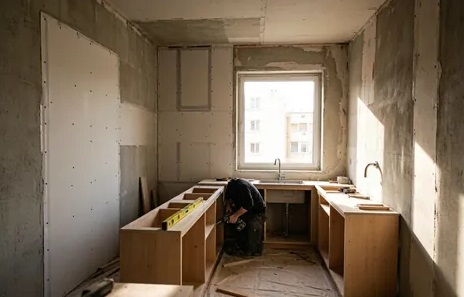
Here is where money is made or lost. Hacking your old floor to the screed then retiling is messy and pricey. Vinyl overlay flooring HDB rules allow you to lay new vinyl straight over existing tiles with no hacking, as long as the floor is sound.
The numbers are why I recommend it so often:
- Overlay avoids the hack, saving roughly 30 to 50% on that part of the job.
- Less debris means a cleaner site and happier neighbours.
- It sidesteps the BTO 3-year rule, since you are not hacking tiles in toilets or elsewhere.
For a 4-room BTO, that saving can mean a few thousand dollars kept in your pocket for carpentry instead. I've seen this happen when owners wanted a fresh look but the budget was tight after the flat purchase.
Flooring by zone. Wet and dry areas
Plan the floor room by room. Toilets and the kitchen get tiles. Bedrooms and the living area get vinyl or laminate. The trick is the transition strip so water from a wet zone does not creep under the dry flooring.
If you do hack, expect to level the floor afterwards. Old screed is rarely flat, and vinyl shows every bump. A good contractor spends time on self-levelling compound before laying anything. Skipping this is the top reason floors feel springy six months in.
For 2025/2026 builds, eco-friendly choices are common. Low-VOC adhesives and E0-rated board underlays keep the home healthier. Pair that with a moisture barrier and your floor stays put through our rainy seasons.
Don't forget the skirting and the door clearance. Thick overlay raises the floor by a few millimetres, and a bedroom door that once cleared the tile may now scrape. A careful contractor trims the door or picks a thinner plank. These small checks are what separate a floor that bugs you from one you forget exists.
My honest take: spend on the wet zones, save on the dry ones with overlay. A floor that lasts is one you barely think about, and that is the goal.