Carpentry Materials Singapore: Planning in Marine Parade
A Carpentry Materials in Singapore starts long before the first board is cut. Most owners underestimate how much the existing layout decides what is possible, and the same oversight shows up again and again.
How MDF and laminate options shape the final result
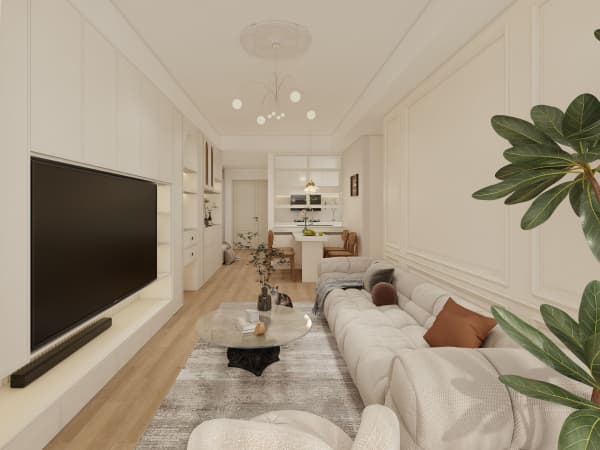
The finish matters more than the board for how a room feels. Laminates in Singapore range from matte to high-gloss, and the better ones resist scratches from keys and bags. For a TV feature wall, MDF with a textured laminate reads well and stays flat. Just keep it away from the bathroom and the kitchen splash.
The numbers matter: a an executive apartment with a study and a kitchen and a S$20,000 cap still gets a full plywood base and soft-close fittings if the owner cuts the face-grade and keeps the inside honest. The feel stays, the cost drops.
How hinges and soft-close fittings shape the final result
Drawer runners matter as much as hinges. Full-extension runners let you reach the back without a fishing expedition, and a soft-close version protects the contents. For heavy pots, rate the runner to the load, not the catalogue minimum. A runner that sags is the sound of a job done to price.
Getting typical carpentry budgets sorted early
Carpentry in a Singapore home spans a wide range. A basic kitchen and a couple of wardrobes can land at S$8,000 to S$12,000, while a full-home build with plywood, soft-close hardware and a feature wall often reaches S$25,000 to S$40,000. The board grade and the amount of custom work move the number more than the room count.
How particle board value affect your schedule
Do not put particle board where it gets wet. A spill on a particle board base cabinet spreads fast and the board crumbles. If budget forces particle board in the kitchen, at least specify plywood for the sink base and the kickboard. The small upgrade prevents a full rebuild two years on.
How low-emission board choices affect your schedule
Green claims need proof. Some shops say 'eco' with nothing behind it. Ask for the standard and the certifying body, and write it into the quote. A serious supplier hands over the paper without a pause, and that paper is what protects your family, not the word.
Understanding custom versus ready furniture in Singapore
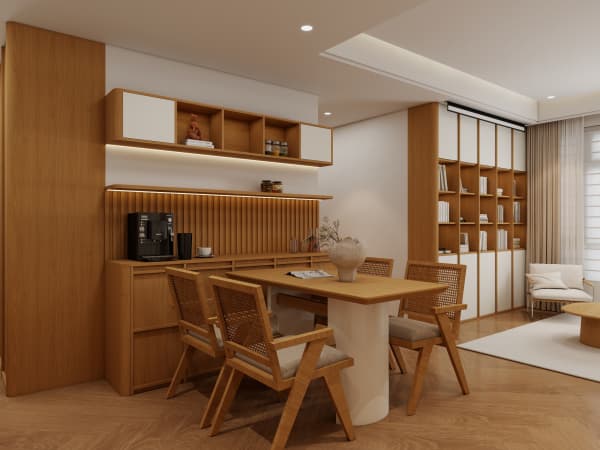
Ready furniture wins on price and speed for the common pieces, and you can see it before you buy. The trap is forcing a standard size into a tight room and living with the gap. A mix works best: custom for the fixed walls, ready for the movable pieces you may take along.
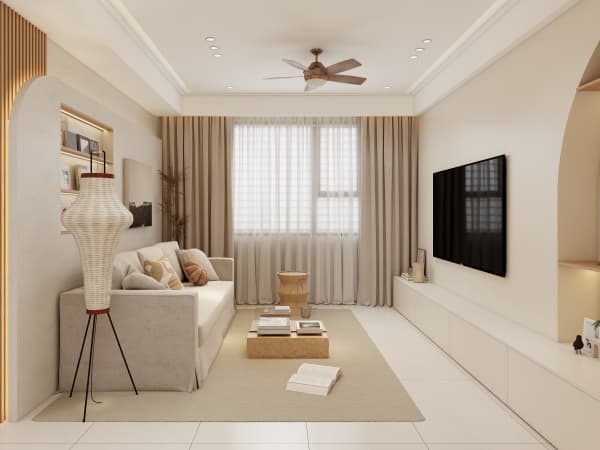
Take an executive apartment as a typical case: the owner had an open living-dining area to fit, and the carpenter planned the storage around the actual items rather than a standard grid, which removed the dead corners that plague smaller Singapore homes.
Understanding comparing board grades in Singapore
Thickness matters as much as the name. An 18 mm carcass holds a loaded drawer; a 12 mm back panel is fine out of sight. Ask for the thickness per part, because a quote that says 'plywood' without a number hides a thin core. The database should list the spec, not just the label.
Where indoor air and board grade usually go wrong
Air quality is a system, not one product. Low-emission board plus a low-VOC edge glue plus a week of airing beats any single premium buy. Ask the carpenter for the glue grade too, because a great board with a poor adhesive still off-gasses. The whole chain must be clean.
How plywood for wet areas shape the final result
The weak point of any board is the edge. Even plywood swells if the laminate edge peels, so ask for PVC or ABS edge banding that is glued and not just stuck on. In a landing where the dishwasher leaks, sealed edges buy you years. Pair the board with a backsplash that goes at least 600 mm up the wall and the cabinet legs stay dry.
Where carpentry warranties usually go wrong
Keep a record of the board grade, the hinge type and the invoice dates in a single file. When a drawer runner fails in year two, that file is what the carpenter needs to honour the claim without argument. Five minutes of notes today saves a long search and a denied claim three years on.
A Carpentry Materials in Singapore is only as good as the record you keep of it. Note the board grade, the hinge type and the warranty dates, and the home will still close cleanly long after the renovation photos are forgotten.
One more point worth a line: keep the contact of the person who owns your project in a single note, with the quote, the permit and the warranty. When something needs a fix in year two, that note is what turns a denied claim into a quick visit. The paper you file today is the service you get later.
A small habit that pays off is to photograph the finished work at handover, before the furniture goes in. The shots show the edges, the gaps and the mitres as they should be, and give you proof if a fault appears after. Five minutes with a phone beats a week of argument about what changed.
Think about the next owner too. A clean, compliant build with the paperwork in order sells faster and for more, because the buyer's lawyer has fewer questions. The work you do for yourself also works for the resale, so treat the records as part of the asset, not just the receipt.
Do not chase the lowest number at the cost of the details. A job that saves on the edge banding and the hinge shows it within a year, and the fix costs more than the saving. Spend on the parts you touch daily, and the home feels right long after the photos are taken.
Finally, give the build a week before you judge it. Wood settles, doors find their rest, and a small adjustment at the start of use prevents a bigger one later. A carpenter who returns for the punch-list is worth more than one who disappears the day the balance is paid.
Match the build to how you actually live, not to a showroom you visited once. The kitchen you cook in and the wardrobe you open daily should reflect your routine, because a home that fits your habits is the one you stop noticing, and that is the highest praise a renovation can earn.