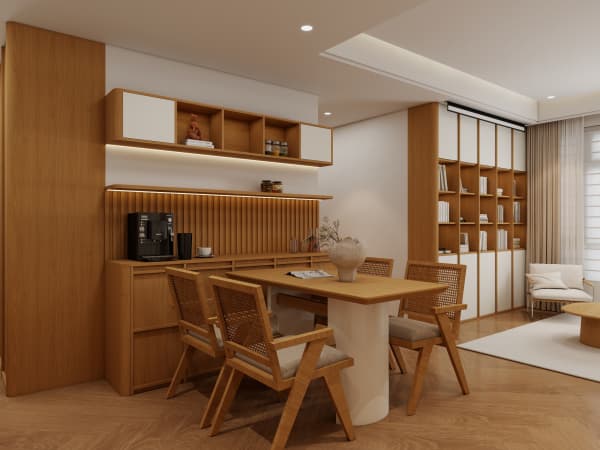
Carpentry Workshop Singapore: Tips for Bukit Batok
A Carpentry Workshop in Singapore starts long before the first board is cut. Most owners underestimate how much the existing layout decides what is possible, and the same oversight shows up again and again.
Understanding joinery basics in Singapore
Joinery also affects service. A joint that comes apart blocks the repair; one that is glued and screwed lets you swap a panel. Tell the carpenter you want repairable joints, not just neat ones. The home ages, and the joint that opens for service saves the piece.
A practical view of fit-out practical tips
Protect the finished work. Once the boards go in, the other trades must tread carefully, or you get a chipped edge and a scratched face. A simple board over the floor and a cover on the cabinet fronts costs little and saves the punch-list. The protection is part of the job, not an extra.
Common questions about plywood for wet areas
Near the sink and the cooktop, moisture and heat decide which board survives. Plywood, made of cross-laminated veneers, holds its shape far better than particle board when it gets damp, so most carpenters use it for sink cabinets and the kickboard zone. A good birch or hardwood plywood in Singapore runs about S$6,000 to S$9,000 for a full kitchen, and it is money well spent where water sits.
A practical view of workshop and on-site building
A proper workshop edges the board with a machine that a hand tool cannot match, which is why factory-finished pieces look sharper. For a landed home with odd angles, a mix works best: standard runs cut off-site, the tricky fillers built in place. Ask which parts are workshop and which are site so you know the timeline.
In Sengkang, a a maisonette often comes with an awkward service yard, and the build that works treats it as a second kitchen rather than a dump. A S$15,000 budget stretches further when the yard pulls its weight.

What checking for defects cost you in the end
Edges reveal the build. A laminate that lifts at the corner, a mitre that does not meet, a panel with a chip at the kickboard, these are the tells. A careful carpenter fixes them before you see them; a rushed one hopes you will not. The check is your proof either way.
A practical view of hinges and soft-close fittings
Brand class is matters less than the spec and the fix. A mid-range hinge set properly beats a top name driven into a soft core. Ask the carpenter which hinge and which runner, by load rating, and write it down. The hardware line on the quote is where you learn the true quality.
Take a condo apartment as a typical case: the owner had a master bedroom suite to fit, and the carpenter planned the storage around the actual items rather than a standard grid, which removed the dead corners that plague smaller Singapore homes.
Common questions about measuring for accuracy
Measure twice, cut once is not a joke in carpentry. A good carpenter measures the real wall at three heights because Singapore flats are not perfectly plumb, then builds to the worst case and scribes the filler. A cabinet that meets the ceiling with a 10 mm gap looks cheap; a scribed one looks built in.
Getting reading a quotation sorted early
Compare quotes by line, not by total. One firm may price the carcass low and the drawers high, another the reverse. The honest way is to send the same spec to two or three and see where they differ. Wild gaps usually mean a different board or a missing step, not a better deal.
Common questions about custom versus ready furniture
Ready furniture wins on price and speed for the common pieces, and you can see it before you buy. The trap is forcing a standard size into a tight room and living with the gap. A mix works best: custom for the fixed walls, ready for the movable pieces you may take along.
Understanding carpentry warranties in Singapore
A carpentry warranty in Singapore typically runs one to five years, with the better shops giving three. Read what it covers: warping, delamination and faulty hinges are fair game, but water damage from a leaking pipe is usually on you. Get the coverage and the claim process in writing, because a verbal promise fades by the time something breaks.
The real win from a Carpentry Workshop in Singapore is a home that fits how you live, not how a showroom looks. Build to your habits, keep the paperwork, and the daily use will thank you for years.
One more point worth a line: keep the contact of the person who owns your project in a single note, with the quote, the permit and the warranty. When something needs a fix in year two, that note is what turns a denied claim into a quick visit. The paper you file today is the service you get later.
A small habit that pays off is to photograph the finished work at handover, before the furniture goes in. The shots show the edges, the gaps and the mitres as they should be, and give you proof if a fault appears after. Five minutes with a phone beats a week of argument about what changed.
Think about the next owner too. A clean, compliant build with the paperwork in order sells faster and for more, because the buyer's lawyer has fewer questions. The work you do for yourself also works for the resale, so treat the records as part of the asset, not just the receipt.
Do not chase the lowest number at the cost of the details. A job that saves on the edge banding and the hinge shows it within a year, and the fix costs more than the saving. Spend on the parts you touch daily, and the home feels right long after the photos are taken.
Finally, give the build a week before you judge it. Wood settles, doors find their rest, and a small adjustment at the start of use prevents a bigger one later. A carpenter who returns for the punch-list is worth more than one who disappears the day the balance is paid.
Match the build to how you actually live, not to a showroom you visited once. The kitchen you cook in and the wardrobe you open daily should reflect your routine, because a home that fits your habits is the one you stop noticing, and that is the highest praise a renovation can earn.