Custom Furniture at bomb shelter: A Nook That Hides Wires
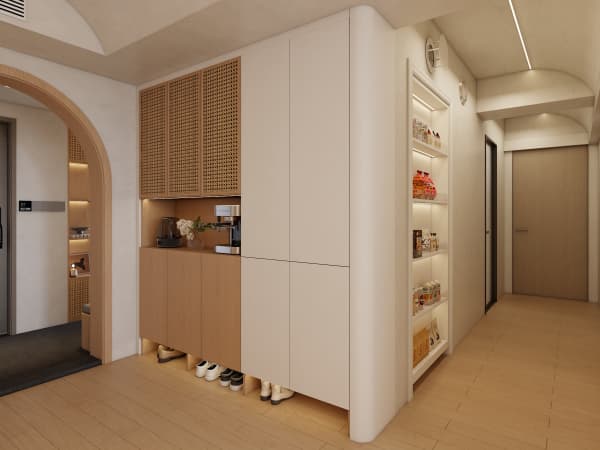
Custom Furniture at the bomb shelter can be a nook that hides wires — a built cabinet against the shelter door or wall that tucks the router, cables, and power strip out of sight while keeping air flow to the equipment. The ugly corner becomes the neatest wall in the flat.
Every HDB flat in Singapore has a bomb shelter, and almost every one becomes a tangle of Wi-Fi boxes, chargers, and cords by the door. A built nook solves it without breaking the shelter's rules. In a 4-room (roughly 90 sqm) or 5-room (about 110 sqm), that corner is worth reclaiming.
How Custom Furniture Builds the Wire Nook
The nook is a shallow cabinet set against the shelter's outer wall, with a back panel routed for cables and a vented door so the gear stays cool. The router sits on a small shelf, the strip tucks behind, and the door closes to leave a clean face.
This is where built-to-measure fits. The shelter wall is often next to an awkward jamb, and a workshop sizes the nook to that exact gap, building around the metal door frame a flat owner can't alter. A shop unit would stand proud and catch the door swing.
Keep the build loose of the shelter door itself — you must reach the handle and the ventilation clearly. The nook dresses the wall beside it, not the door, so the shelter stays compliant and the cords vanish at the same time.
Materials That Sit by the Metal Wall
Build the carcass from plywood; it won't react with the shelter's steel surround and stays square in our humidity. Laminate doors wipe clean and hide the fact that a server lives behind them. Solid wood adds warmth but needs oiling and a dry spot.
Avoid MDF near this corner — any leak from above will swell it, and the shelter area sees the odd drip. Use a moisture-resistant board for the liner and seal every cut edge. Spend on a quiet, well-vented door so the equipment doesn't cook behind a sealed front.
Cost, Timeline, and the Shelter Rules
A wire-hiding nook runs roughly S$700 to S$2,000 fitted, depending on width and the venting. It's a small slice of the S$30k to S$70k a whole-house Singapore reno often totals, and it's the piece that finally calms the entry.
Measure to install is about 6 to 10 weeks. The nook is built off-site and fitted in a half-day. Condo owners clear the MCST permit and lift rules first; HDB owners should note the 1-year defect liability period and report any door that binds while the builder is still liable.
Remember the shelter stayclear rule: nothing permanent can block the door or its ventilation. A nook beside the shelter is fine; a nook bolted across it is not. Build to the side and you stay within the guidelines without a word of trouble.
Upkeep and Resale Thinking
Dust the vents monthly and check the cables aren't pinched where they pass the panel. Tighten the fixings every six months, since the door area sees more bumping than a quiet wall. A quick wipe keeps the front looking like plain cabinetry, not tech.
At resale, a flat with a tidy shelter corner reads as cared-for, which Singapore buyers notice at the very start of a viewing. It won't add a set sum, but it removes the "why is this wall a mess" question and lets the rest of the home speak for itself.
Measure the wall beside the shelter, build from plywood with real vents, and keep clear of the door. Let the nook hide the wires, and the corner you used to avoid becomes the cleanest wall in the flat.