Custom Furniture of dining room: Gaps Turned Into Drawers
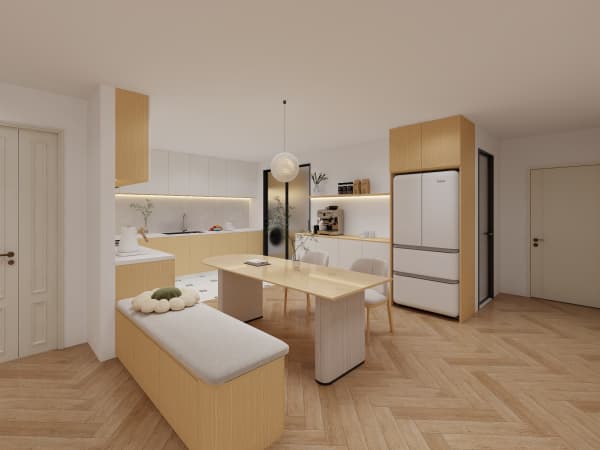
Custom Furniture in the dining room can turn the awkward gaps between wall and cabinet into useful drawers, because most dining spaces in Singapore flats leave dead strips that a standard sideboard can't fill. Measure the gaps, build to them, and you gain storage nobody else thought to use.
Why dining rooms waste space
A dining area in a 4-room HDB (about 90 sqm) is often carved from the living zone, so the sideboard rarely meets the wall flush. You get a 15-centimetre slit on one end and a slanted corner on the other. Those gaps collect dust and lost chopsticks, and that's a shame in a room with little storage.
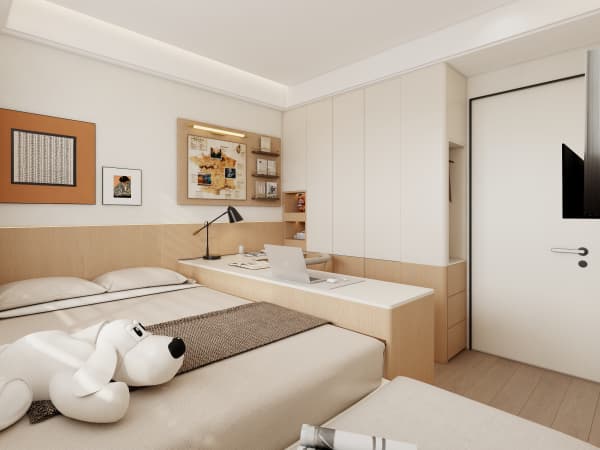
Off-the-shelf units come in fixed widths, so they either stop short or jut past the wall. Only a built piece follows the actual room, and that's where the drawers hide.
Finding the gaps worth filling
We walk the room with a tape before drawing a thing:
End gaps. The strip beside the sideboard, often 10 to 25 centimetres, becomes a slim pull-out for placemats.
Corner angles. Where the wall meets at less than 90 degrees, a scribed drawer fills the wedge exactly.
Below the ledge. The space under a window seat or ledge takes a shallow tray for table linens.
Custom Furniture that fits the dead strips
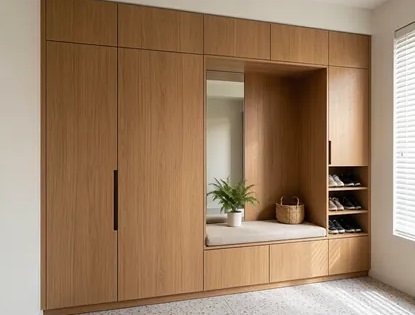
Custom Furniture here means every centimetre earns its place. We build the main sideboard, then add the gap drawers as part of the same run so the whole thing reads as one piece. No visible seams, no dust traps, just storage where there was void.
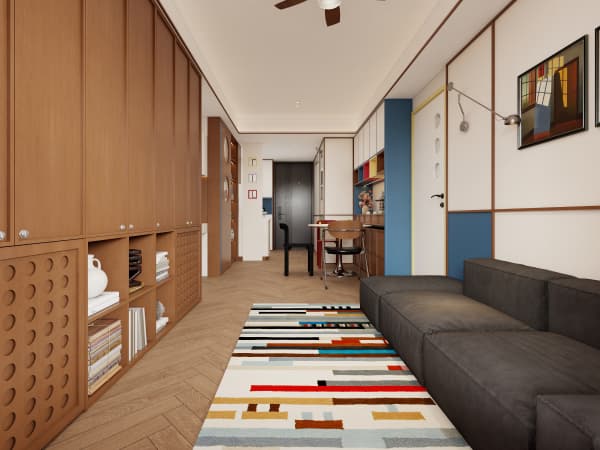
In a 5-room flat (around 110 sqm) the dining wall is longer, so the gap drawers multiply — a full run can hide cutlery, tablecloths and the kids' art supplies behind a single calm front.
Materials for a room that entertains
The dining piece gets wiped often and sees spills, so the boards matter:
Plywood stays flat through our humidity and survives the weekly clean. Our default for the carcass.
Laminate gives a wipe-clean, stain-resistant face — useful when a glass tips over. Choose a mid-grade that won't peel.
MDF is fine for the drawer backs and inside faces, but keep the outer edges in something tougher.
Solid wood looks rich for a dining showpiece and lasts, though it asks for the highest budget and care against ring marks.
Cost, timeline and HDB rules
A dining run with gap drawers in a 4-room HDB runs roughly S$1,800 to S$4,000, depending on length and board. A 5-room with a full wall reaches S$5,500 or so. Condo dining rooms follow the same pricing, but MCST rules can limit built-ins near fire-rated walls, so check the by-laws early.
From measure to install, set aside about 6 to 10 weeks. That covers drawing, material lead time, fabrication and fitting. Most full renovations here fall between S$30k and S$70k, so the dining piece is a contained part.
HDB work carries a one-year defect liability period. If a runner or panel fails in the first year, it's put right. File the paperwork where you'll see it.
Upkeep and resale
Wipe laminate with a damp, not soaked, cloth and dry rings promptly — water marks are the one thing that shows. Every few months, run the gap drawers in and out to check the sliders; a sticky one means a screw needs a turn.
At resale, a dining room with hidden storage reads as generous, not crowded. Buyers see a clean wall that somehow holds everything. Keep the finish light and the drawers subtle, and the next family slots their own routine in without a thought.
The dining room is where storage hides in plain sight. Those gaps beside the sideboard aren't wasted space — they're drawers waiting to happen. Build to the room's real shape and you stop losing chopsticks to the void and start gaining storage your neighbours never had. It's the kind of quiet win that makes a custom build feel less like a splurge and more like common sense.