Custom Furniture at dining room: A Surface That Takes Heat
Custom Furniture at the dining room should start with a surface that takes heat, because the Singapore table is where hot pots, kaya toast pans and just-off-the-stove plates land without warning — and the wrong top will mark, crack or stain on the first careless placement. Pick the tabletop like you cook every day, because in most homes, you do.
Why Custom Furniture Needs a Heat-Ready Top
Not every table material forgives heat. A cheap laminate will blister and the pattern will peel the moment a hot pot base sits on it for thirty seconds; the damage is permanent and ugly. Solid surface (the seamless acrylic-stone sheet) shrugs off heat to roughly 180°C and can be sanded back if scratched, which makes it a favourite for families. Quartz takes heat too but is not invincible — a very hot vessel can shock it, so most fabricators still advise a trivet. Solid wood is the romantic choice and feels warm under the hand, but it scorches, rings with water, and needs oiling to stay alive in Singapore's humidity.
Sizing the Table to the Flat
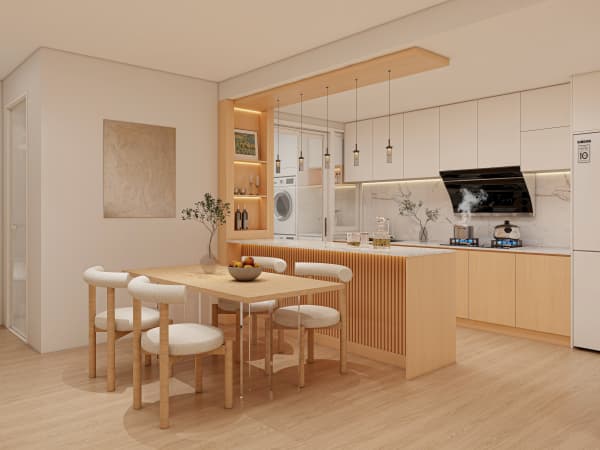
In a 5-room HDB, where the home is about 110 square metres, the dining area is often a defined alcove off the open kitchen, so a table around 1.5 by 0.9 metres seats four to six without blocking the walkway to the service yard. A 4-room home closer to 90 square metres may need a 1.2-metre round to keep the corridor clear. Build the table to the room you have, not the number of guests you imagine — you can always add a leaf later, but you cannot add floor.
- Allow 60 cm of chair-pull space behind each seat against the wall.
- Keep the table edge at 72–75 cm high to match standard dining chairs.
- Round the corners if small children share the room; squared edges meet foreheads.
Care, Trivets and the Warranty
Even a heat-ready top lasts longer with a little respect. Use a trivet for the pressure-cooker and a placemat for the sweating drink, and the surface will look new in five years. Solid surface can be repaired on site by a fabricator; quartz chips need a pro; wood needs periodic oil. Most dining carpentry carries the standard one-year defect warranty covering the joinery and the substrate, but surface scorch and stain are almost always classed as wear, so the trivet is your real insurance.
Budget and Lead Time
A custom dining table with a solid-surface or quartz top on a plywood or timber base typically runs S$1,500–S$3,500, depending on size and edge profile. As a standalone piece it sits outside the main renovation, but if it is part of a full home job it folds into the S$30k–S$70k scope. Expect the usual six-to-ten-week carpentry lead time, slightly longer if you wait on a stone slab delivery. Build the base to outlast the top, and you can refresh only the surface when taste or damage calls for it.
Choose a top that forgives the busy nights, and the dining table becomes the room's workhorse instead of its museum piece. That is the right call for a Singapore home where the table is rarely just for dining.