Custom Furniture in bathroom: A Peg Wall That Moves
Custom Furniture for a bathroom with a moving peg wall usually costs S$400 to S$1,200, and the moving part is the point: pegs slide into a perforated backer so you reposition hooks for towels, loofahs, and a hairdryer as needs change. In an HDB bathroom the build must stay waterproof and must not touch the pipes or the window, which keeps the design tight but very doable. Most HDB baths are just 2 to 3 sqm, so every centimetre of wall above the basin is prime real estate.
Where Custom Furniture Fits in a Small HDB Bathroom
The best spot for a peg wall is the stretch of tile above the sink, roughly 0.6 m to 1.0 m wide and starting at 1.2 m height so it clears the splash zone. HDB rules forbid hacking the walls or moving the bathroom layout, and you cannot drill into the concealed soil pipe or the window frame, so the peg board is fixed only to the tile with corrosion-proof anchors. Keep it off the floor and away from the shower head spray, and the wall stays dry enough to last. In a 4-room or 5-room flat the main and common baths are both candidates, though the common one sees more towel traffic.
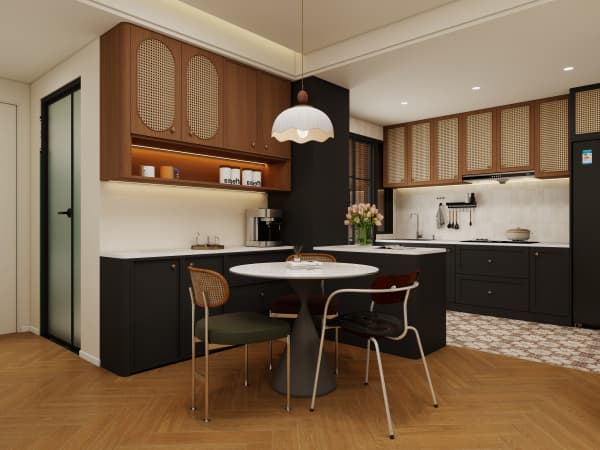
Why a Peg Wall Moves When Fixed Shelves Don't
A fixed shelf commits you to one layout: towels here, bottles there, and that is it until you redo the bath. A peg board takes a grid of holes and pegs you slide wherever you like. Hang two towels one week, add a hook for the hairdryer the next, drop in a small basket for the kids' bath toys the week after. The flexibility suits a bathroom whose users change, a baby arrives, a teen moves in, a parent stays over, without a single new hole in the tile. Use pegs with a slight upward curve so items do not slide off when the board warms up.
Materials That Laugh at Bathroom Steam
Bathrooms are wet by definition, so material choice is not optional. Marine-grade aluminium composite or a PVC board resists the daily steam that would swell MDF within months; solid wood will cup unless it is sealed on every face, which pushes the cost up for little gain in a bath. The pegs themselves should be stainless or powder-coated steel so they do not rust against the damp air. A sealed laminate face wipes clean of toothpaste and soap film with a quick cloth, and the whole board stays off the wall by a few millimetres so air circulates behind it and mould cannot take hold.
Cost, Lead Time, and Upkeep
Budget S$400 to S$1,200 for a peg wall with a starter set of pegs and a small shelf, more if you wrap the whole basin alcove. Because it is small, some workshops fold it into a larger bathroom vanity order so you share the lead time, which is still the standard six to ten weeks. A one-year defect warranty covers the board and fittings; rust on cheap pegs is on you, so buy the stainless set from the start. Wipe it weekly and the wall stays a moving, tidy home for everything the bathroom throws at it.
A moving peg wall turns the dead tile above the sink into flexible storage that shifts with the household. Keep it waterproof, anchor it to the tile, and the bathroom finally has a place for everything.