Custom Furniture by corner: A Sewing Bay That Closes
Custom Furniture in a corner can give you a full sewing bay that shuts away completely, and in a Singapore flat where the dining table doubles as everything, that closing door is the difference between a hobby and a permanent mess. A fitted corner with a fold-down machine shelf keeps the craft ready but out of sight.
Why the corner works for sewing
Sewing needs a flat run for fabric, a stable base for the machine, and storage for a surprising pile of thread, scissors, and offcuts. A dead corner by a window is ideal because you get natural light without losing walkway.
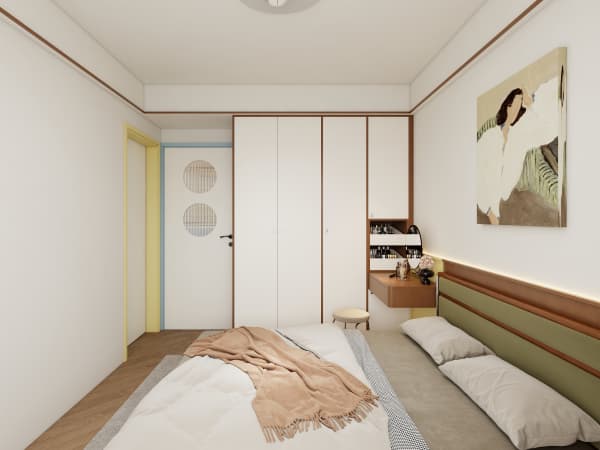
In a 4-room HDB of roughly 90sqm the corners are often the only free wall left after the sofa and beds go in. Build into one and you reclaim a whole activity without shrinking the living space.
The closing part matters most. A sewing bay left open collects dust on the machine and reads as clutter to anyone who visits, which is the fast track to abandoning the hobby.
Designing the bay that closes
The heart is a drop-down shelf the machine sits on, with the cabinet wrapping around it. Here's the build:
A fold-out worktop at chair height that locks flat when you sew and folds up to close.
A recessed machine slot so the unit sits flush and the door still shuts.
Thread racks and trays on the inside of the door, visible only when open.
A task light wired inside, angled so it doesn't glare into the room when closed.
A pin-cushion ledge and a small bin slot to keep the offcuts contained.
Materials that take the wear
Plywood with a laminate skin is the practical choice. The worktop sees pins, irons, and the odd coffee ring, so it needs a surface you can scrub.
MDF is too soft for a sewing top and sags under a heavy machine over time. Solid wood is lovely for the door front but pricey; keep it to the facing and let plywood do the work.
On average a closing sewing bay runs S$900 to S$2,000, depending on how much storage you wrap around it. That's modest next to a S$30k to S$70k reno, and it can be added after you've lived in the flat a while.
Timeline, rules, and fitting
From measure to install, allow 6 to 10 weeks if it's part of a larger fit-out, or a shorter standalone slot if it's a single corner.
In an HDB the corner is internal, so no permit, but route the light's power through a licensed electrician. Condo owners should check MCST rules if the corner backs onto a common wall, though an internal sewing bay rarely raises an issue.
Fix the cabinet to studs or use proper anchors, since a sewing bay gets leaned on and pulled open daily. A wobbly frame will loosen within the one-year defect period if it's not set right.
Upkeep and the resale read
Wipe the worktop after each session and oil the hinge once a year so the drop-down stays smooth. Check the machine slot for thread build-up that can jam the close.
During humid months, leave the bay cracked open occasionally so the fabric stash breathes; a sealed sewing cabinet can trap damp into the cottons.
For resale, a corner that hides a whole hobby reads as extra capability, not lost space. Buyers of compact HDB and condo homes like seeing a flat that can absorb a passion without taking over the living room. A sewing bay that closes lets you keep the craft and the calm, in the same corner, on the same day.