Custom Furniture by shelf: A Wall That Swallows Sound
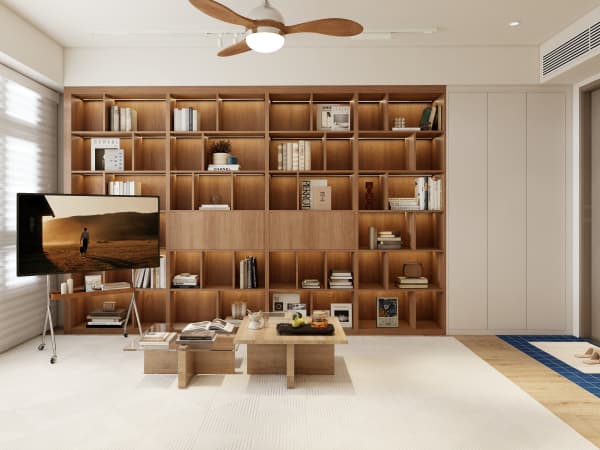
Custom Furniture lets you build a shelving wall that quietly absorbs sound, which is a real lifesaver in tightly packed HDB and condo blocks. If you live in a 4-room flat around 90sqm with thin party walls, a floor-to-ceiling shelf filled with books and backed by an acoustic panel turns a noisy wall into a calmer one.
How a shelf wall actually swallows sound
Sound bounces off bare walls and hard floors. A deep shelf breaks up those flat surfaces, and the objects on it, books, baskets, plants, scatter the noise. Put an acoustic backing board behind the shelves and you cut echo further without anyone noticing a "panel."
You don't need a recording-studio look. A simple plywood back, lined with a felt or fabric-wrapped board, does the trick. The shelf front stays open so the room still reads as a normal living space.
Pay attention to the gaps. Leave the shelf a few centimetres off the wall and fill the cavity with soft material. That air gap is what stops vibration from travelling straight through.
Planning Custom Furniture for your room
Measure the wall you want to treat and decide the height. Most flats suit a run from floor to about 2.4m. A 5-room home near 110sqm can carry a longer wall without feeling boxed in.
Mix open and closed sections. Open shelves show off books; closed cabinets hide the odds and ends. The closed boxes also add mass, which helps block the low rumble from neighbours.
Keep the heavy, dense items at ear height where speech sound lives. Light decor up top is fine, it's the mid-section that does the most work.
Materials and what works in our weather
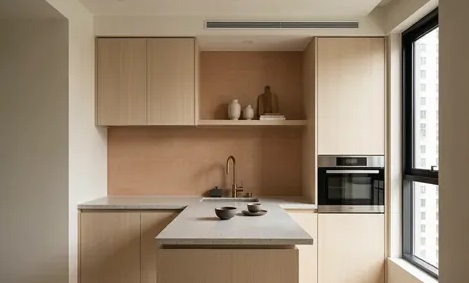
Plywood is the safe pick for the carcass, it stays straight through our humidity and holds screws well. MDF gives a smoother painted face but swells if it gets wet, so keep it away from windows that leak.
For the acoustic backing, a felt board or fabric-covered panel is light and easy to fit. Solid wood looks rich but costs more and moves with the seasons, so reserve it for trim rather than the whole wall.
Laminate fronts on the closed cabinets wipe clean and resist the mild mould risk in poorly ventilated corners. Just make sure the room gets some airflow so the backing board stays dry.
Cost, timeline and building rules
A sound-taming shelf wall runs roughly S$1,500 to S$4,000 depending on length and finish. That's a modest slice of a full reno budget of S$30k to S$70k.
Expect about 6 to 10 weeks from measure to install. Design and material choice take a week, fabrication the bulk, then a day or two of on-site fitting.
HDB is fine with internal shelving as long as you don't breach the partition or touch the bomb shelter. In a condo, check your MCST rules first. Some buildings limit works that alter common-corridor sightlines, though an internal wall shelf is usually allowed.
Upkeep and resale thoughts
Dust the shelves weekly and check the backing board for damp spots twice a year. If you see staining, improve ventilation before it spreads.
When you sell, a full wall of built-in shelves signals a home that's been looked after. Buyers picture their own books there. It won't guarantee a price jump, but it makes the flat memorable against the next listing.
Hold on to the material list. If anything shifts in the first year, the defect liability period covers poor workmanship, and your notes speed up any claim.
Living with a quieter wall changes how a flat feels more than you'd expect. Build the shelf to suit your actual books and you'll get both the storage and the calm.