Custom Furniture for pantry: A Backdrop That Fights Grease
Custom Furniture for a pantry works best when the backing panel behind the counter is built to shrug off oil, because in a Singapore home the pantry sits next to a kitchen that cooks every day and a plain painted wall turns sticky within weeks. The fix is a seamless, wipe-clean backdrop that runs the full width of the counter and a little above it, so splashes never reach the plaster.
Why a pantry backdrop attracts grease faster than you expect
Most Singapore pantries are not a separate room. They are a run of cabinets tucked against the kitchen wall or inside a service yard, and that puts them right in the path of the oil mist that a wok throws out. Even with a good extractor hood, the fine aerosol settles on the first vertical surface it meets. In an HDB flat the kitchen is small, often just three to four metres of counter, so the pantry backdrop is only a step from the stove. The grease does not arrive as a dramatic splash; it arrives as a film that you only notice when you run a finger and it comes away dull. By then it has bonded with dust and cooking steam, and a normal emulsion wall needs a degreaser and elbow grease to restore.
The reason a custom panel beats paint is simple. Paint is porous at the microscopic level and the film keys into it. A factory-finished laminate or acrylic sheet has a non-porous surface, so the same film sits on top and wipes off with a damp cloth. That single difference is what saves you the monthly scrubbing and keeps the pantry looking the way it did on moving-in day.
Why Custom Furniture Beats a Tiled Splashback Near the Stove
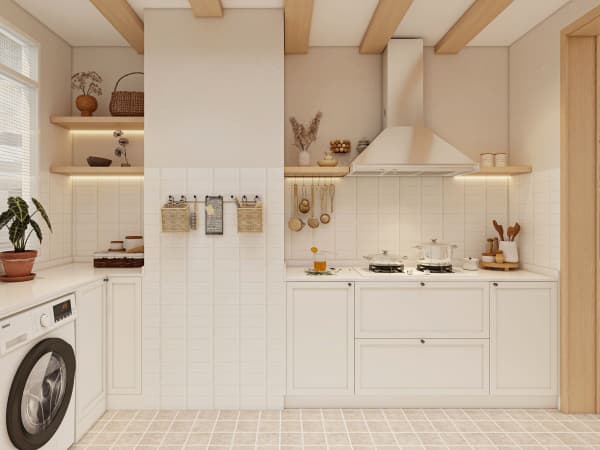
A tiled splashback is the usual answer, but tiles have grout lines and grout is exactly where grease hides. In a pantry that sees light use this is fine, yet near a stove the grout yellows and the only way to clean it is a brush and a lot of patience. Custom Furniture lets you specify a single continuous sheet with no joints at all behind the busiest zone, then let the tile take over higher up where splashes rarely reach. You get the look of tiles where it matters and a wipe-clean plane where it matters more.
Material choice is where the real decision sits. Laminate is the workhorse: it resists oil, costs the least, and comes in flat whites and woodgrains that suit a pantry. Acrylic is glossier and even easier to wipe, but it shows every fingerprint, so it suits a pantry you keep tidy rather than one that sees heavy prep. Sintered stone or quartz as a thin slab behind the counter is the premium pick; it shrugs off heat if the pantry doubles as a coffee station, and it will not stain from turmeric or tomato. Solid surface such as a Corian-style sheet is the middle ground and can be joined invisibly, which is why many carpentry firms suggest it for a seamless look that still reads warm.
Details that make the backdrop easy to live with
Height is the first detail. Run the panel at least 450 mm above the counter, or to the base of any upper cabinet, whichever is higher. Grease climbs higher than people expect when a pot boils over or someone stirs vigorously, and a short panel just moves the problem up the wall. A return lip at the top, where the panel tucks behind the cabinet, stops the film creeping onto the plaster above and keeps the edge from curling.
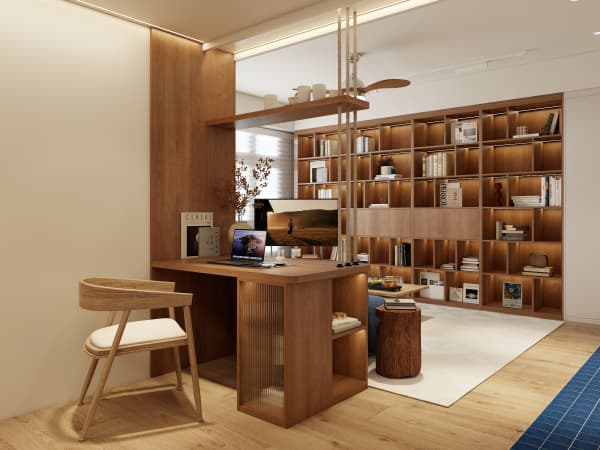
Open shelving in a pantry looks lovely in a show flat but collects grease on the underside of every shelf, and that is the spot nobody thinks to wipe. If you want the open look, keep the open shelves away from the stove side and put the closed, wipe-clean backdrop behind the cooking-adjacent counter. A thin LED strip under the upper cabinet does double duty: it lights the counter for late-night snacks and it draws the eye away from the panel, so the pantry reads as bright rather than utilitarian.
Edge banding matters more than it sounds. Ask for a matching PVC or acrylic edge, not a visible raw chipboard edge, because the raw edge is the one place oil can wick in and lift the facing. Most Singapore carpentry uses MR (moisture-resistant) plywood or MDF carcasses; for a pantry beside a kitchen, MR plywood is the safer carcass because it copes better if a pipe leaks or a bottle drips onto the floor and pools against the kickboard.
What it costs and how long it takes
A pantry backdrop is a small job, so it is usually quoted as part of the larger carpentry package rather than on its own. As a rough guide, a continuous acrylic or solid-surface sheet behind two metres of counter might add a few hundred dollars to the cabinet price, while sintered stone pushes it higher, and a full-height stone backdrop behind a longer run can run into the low thousands. Lead time is the bigger constraint: carpentry in Singapore typically runs six to ten weeks from confirmation to installation, and a BTO owner should book the measurement the moment the renovation permit is approved so the pantry lands with the rest of the kitchen instead of arriving weeks after the family has moved in.
The warranty question is worth asking before you sign. A one-year defect warranty is standard among local carpentry firms, covering delamination and hardware, but it does not cover staining from neglect or chips from a knocked pan. The backdrop fights grease best when you give it a quick wipe weekly, which takes a minute and keeps the factory finish looking new for the life of the renovation. Treat it as a surface, not a fixture, and it will outlast every painted wall in the flat.