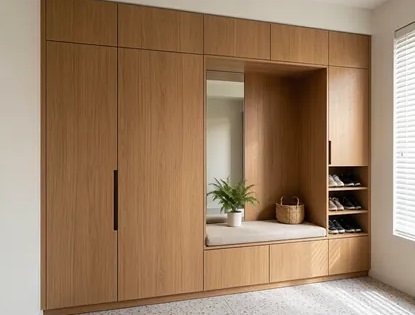
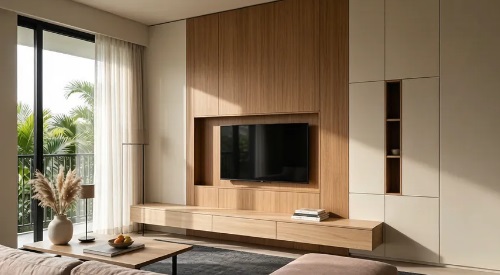
Custom Furniture Materials: Solid Wood vs Plywood vs MDF
When you plan custom furniture for a Singapore home, the single decision that shapes cost, durability, and look is the board you build from. For most HDB and condo projects, plywood and MDF with a good laminate finish do the job better than solid wood, which warps badly in our humidity. Below we break down how each material actually performs once it lives in your flat.
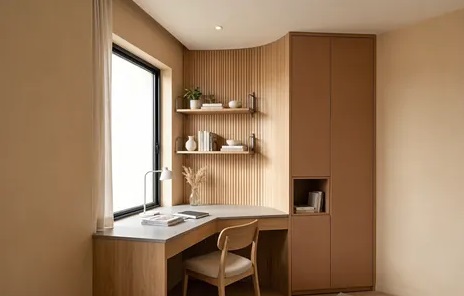
Why Material Choice Makes or Breaks Your Renovation
Singapore's year-round humidity sits around 80% and the HDB guideline temperature swings from air-conditioned cool to open-window heat are brutal on timber. The wrong core board twists, cracks at the joints, and starts peeling within a year. You don't notice it on day one at the showroom; you notice it when your wardrobe door won't close after the rainy season.
Here's the practical way I sort materials for clients:
- Load-bearing and wet zones (kitchen base cabinets, bathroom vanity): marine-grade plywood.
- Flat panels and doors (wardrobe fronts, study tables): MDF with laminate or veneer.
- Statement pieces (a solid feature table): solid wood, but sealed and kept away from windows.
Custom Furniture Built From Solid Wood
Solid wood is beautiful and feels substantial, but it's the fussiest option in our climate. Teak, oak, and walnut all expand and contract with moisture, so a solid wood panel in an east-facing bedroom near the balcony can gap at the seams.
Pros you'll actually feel:
- Repairable - scratches and dents can be sanded out and re-oiled.
- Long lifespan - a well-kept solid piece can outlast the renovation.
- Resale appeal - buyers in the condo market still read solid wood as quality.
Cons that bite:
- Price - solid wood carcasses cost roughly 2 to 3 times a plywood build.
- Movement - needs a stable, sealed environment to stay straight.
- Lead time - good kiln-dried stock takes longer to source.
Plywood: The Workhorse of Local Homes
Plywood is layers of veneer glued at alternating grain, which is exactly why it resists warping better than a single slab. For a 4-room HDB flat of about 90 sqm, most carpenters default to plywood carcasses for good reason.
What you get with plywood:
- Stability - holds shape through our humidity swings.
- Screw holding - takes hinges and runners firmly, so drawers stay put.
- Cost - sits in the middle, cheaper than solid wood, a bit above MDF.
The catch is the edge. Plywood edges show the laminated layers, so you'll either band them with PVC or cover with a solid frame. Skip that step and the piece looks unfinished.
MDF and Why We Use It for Doors
Medium-density fibreboard is compressed wood fibre, smooth and dense. It can't take screws the way plywood does, and it balloons if it gets wet, but for flat, painted, or laminated fronts it's hard to beat.
Where MDF shines:
- Smooth finish - ideal for spray-painted shaker-style wardrobe doors.
- Cost - the cheapest of the three, good for large runs of panels.
- Consistency - no grain movement, so paint stays even.
The non-negotiable rule: keep MDF out of the kitchen splashback and the bathroom. A leak will ruin it. For a 5-room HDB of roughly 110 sqm, I'll often spec MDF doors over plywood carcasses - you get the look without paying for solid timber.
Matching Material to Room and Budget
A whole-house job rarely uses one board for everything. A sensible split keeps you within a typical S$30k-70k renovation budget while still looking coherent.
Try this mapping:
- Kitchen - marine plywood carcass, laminate doors, quartz top.
- Wardrobes - plywood box, MDF or plywood doors in matching laminate.
- Living storage - plywood with veneer for open shelves.
- Feature pieces - one solid wood item, sealed, away from direct sun.
Remember the HDB 1-year defect liability period. If a board warps or a door drops within that window, your contractor owes you a fix. Photograph every joint at handover so you have proof of how it started.
Maintenance is simpler than people think. Wipe with a slightly damp cloth, never soak, and run the dehumidifier during the November-to-January monsoon. Touch up laminate edges if you see a lift, because once moisture gets under, the board swells fast.
Picking materials for a whole-house fit is less about chasing the most expensive board and more about putting the right one in the right room. When the carcass, door, and finish are matched to how you actually live, the furniture stays straight and quietly does its job for years.