Custom Furniture for Tight Corners: Dead Space to Storage
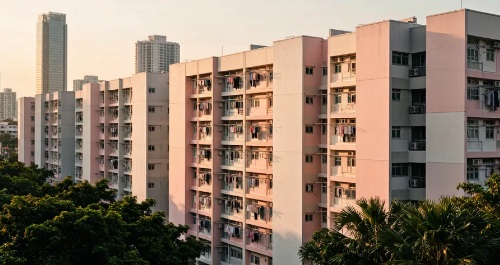
Those awkward L-shaped corners in your HDB or condo aren't wasted space — with the right Custom Furniture, you can turn them into storage that actually earns its keep. Most flats in Singapore lose half a metre of usable floor area at every corner, and that adds up fast in a 4-room BTO of roughly 90 sqm or a 5-room of about 110 sqm.
Why Custom Furniture Beats Off-the-Shelf for Corners
Ready-made shelving comes in straight runs and fixed widths. Corners don't. A standard bookcase leaves a triangle of dead space behind it, and a typical wardrobe won't wrap around a bay window or tuck into a column. We build to the room, not the catalogue.
Here's what we measure before we draw a single line:
- The exact diagonal and the two wall lengths meeting at the corner.
- Any structural columns, beams, or exposed pipes the design must work around.
- Door swing and walkway clearance so the corner unit never blocks movement.
- Ceiling height, since many HDB flats give you 2.6m to play with for full-height cabinets.
The goal is to make the corner disappear into the wall, so the eye reads a clean line instead of a gap.
Smart Corner Solutions We Build Every Week
A few designs work especially well in local flats:
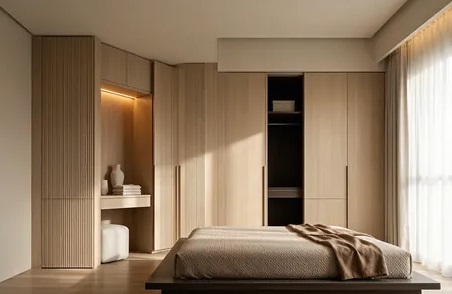
Corner carousel wardrobes. For master bedrooms, a 270-degree pull-out tray brings the deep corner within arm's reach. No more shuffling hangers to find the shirt at the back.
Lazy-Susan kitchen corners. Base cabinets with a rotating shelf recover the dead zone under the counter. You stop losing Tupperware to the void.
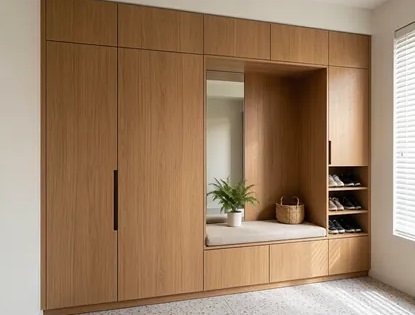
Window-seat storage. In a 5-room flat, the corner by the living window becomes a cushioned seat with lift-up compartments for board games and winter clothes.
Study nooks. A corner desk with overhead shelves fits neatly into a common bedroom, giving a kid a homework spot without eating the whole room.
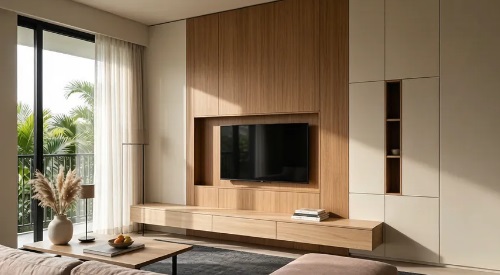
Display ledges. Floating triangular shelves turn an empty corner into a small gallery for family photos and plants.
Material Choices for Humid Singapore Homes
Moisture is the quiet enemy here. Corners against external walls can get damp during our long rainy seasons, so the material matters.
Plywood (often birch or local meranti core with a laminate face) resists warping better than solid wood in our climate and costs less. It's our default for corner cabinets.
MDF gives a smooth, paint-ready surface for a built-in look, but it swells if water sits on it. Keep it away from the kitchen splash zone.
Solid wood looks lovely and lasts decades, yet it moves with humidity and needs a finish that copes with our weather. Expect to pay more and maintain it.
Laminate faces over plywood are the practical sweet spot: easy to wipe, scratch-resistant, and available in wood-grain finishes that suit most HDB interiors.
Cost, Timeline, and HDB Rules to Know
For a single corner unit, budget roughly S$600 to S$2,500 depending on size and fittings. A full corner-to-corner feature wall runs higher. These sit within the typical S$30k to S$70k whole-flat renovation budget most owners plan for.
Timeline: from measuring to installation, plan on roughly 6 to 10 weeks. That covers site measurement, 3D design, material cutting at the workshop, and fitting. Rush jobs cost more and fit worse.
Two rules matter for HDB owners. First, you can't hack structural walls or move the bomb shelter — corners inside those stay as they are. Second, HDB's renovation work comes with a 1-year defect liability period, so any joint that opens or panel that drops should be fixed by your contractor within that window at no charge.
Condo owners face MCST by-laws instead. Many managements require noise-control hours and a deposit against common-area damage, so book your install dates with the management office early.
Getting the Most Out of Every Inch
Start by listing what you'd store in the corner if space weren't an issue. Shoes, documents, festive decorations, the vacuum cleaner — the answer tells us the shelf height and depth.
Then think about lighting. A corner with no light reads as a dark hole. A small LED strip inside the cabinet makes the storage feel intentional rather than hidden.
Don't overfill the design. A corner that's crammed to the ceiling looks heavy. Leave one open shelf for a plant or a frame, and the whole corner feels like part of the home rather than a cupboard bolted on.
If you've been stepping around that empty corner for months, it's worth a proper look. Whole-house customization starts with the spaces you've written off — and a corner done well often becomes the spot visitors notice first.