Custom Furniture of bathroom: Rounding Every Sharp Edge
Custom Furniture in the bathroom should round every sharp edge, because a tiled room with hard surfaces turns a small slip into a cut. Softened corners on the vanity and shelves lower the chance of a nasty knock, especially with kids or elderly parents at home.
Why Custom Furniture edges matter
HDB bathrooms are compact, around 2 to 3 sqm in a 4-room (~90 sqm) or 5-room (~110 sqm) flat, so you move close to the fittings. A square vanity corner at hip height is exactly where you'll catch yourself.
Wet floors make the room the riskiest space in the home. When someone slips, the body turns toward the nearest hard thing. Rounded edges turn a likely gash into a bump.
It also helps resale. A bathroom that looks safe for a grandchild or an aged parent widens your buyer pool, which matters in 2025 and 2026 as more flats change hands among families.
Where to round the corners
The vanity front edge takes the most contact, so ask for a bullnose or a 10 to 15mm radius rather than a crisp 90-degree line. The open shelf ends and the mirror cabinet corners should match.
Counters that jut into the room, like a basin ledge, need the outer corner eased most. Even the toilet roll holder niche benefits from a soft lip so a leaning shoulder doesn't scrape.
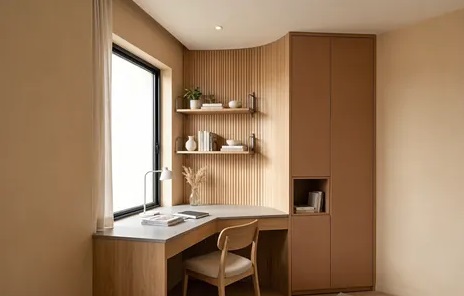
This Custom Furniture detail costs little to add at the build stage and can't be retrofitted cleanly later. Say it in the drawing, not after the piece is cut.
Materials and rough cost
Plywood with a solid lipping rounds well and holds the curve under steam. A high-pressure laminate face resists water and wipes dry, but make sure the edge is sealed or it'll peel at the radius.
MDF can be shaped to a round edge and paints smooth, yet swells if water sits on the seam. Solid wood rounds beautifully and feels warm, though it needs oiling in our humidity and costs more.
On average, rounding edges adds roughly S$100 to S$400 to a vanity, depending on how many faces get the treatment. It's a small part of a reno budget that runs S$30k to S$70k for a full flat.
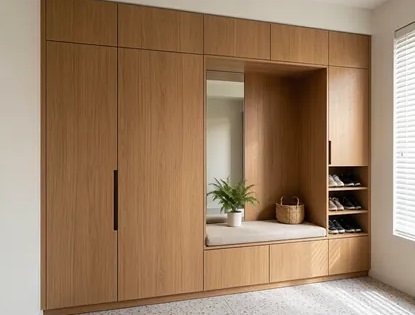
Timeline and the rules to note
From measuring to install, plan about 6 to 10 weeks. Rounding is done in the workshop, so it doesn't extend the on-site time. Order with your other bathroom carpentry to keep one schedule.
For HDB, the vanity is internal, so rules rarely apply. Don't drill into concealed pipes or the wall waterproofing membrane; mark your points and let the installer avoid them.
Condo MCST rules may require a renovation permit and fee, and limit work to set hours. Some buildings control contractor entry, so arrange access with the managing agent before the fit date to avoid a hold-up.
Care and long-term value
Wipe rounded edges dry after showers so water doesn't sit on the seam. Check the lipping yearly; if it lifts, a dab of adhesive keeps it down before it peels further.
The 1-year defect liability period from your reno contractor covers poor edge sealing, so flag any peeling early. After that, it's your upkeep, which stays light with a quick weekly wipe.
We rounded every edge in our reno after my mother-in-law stayed with us and bumped the old square vanity. The room feels calmer now, and the softer look suits a small space. If you're renovating with family in mind, ask for it from the start.