HDB Renovation: soundproofing that actually works
HDB Renovation soundproofing is one of the most misunderstood parts of a flat upgrade. You cannot knock down the party wall or add thick concrete, but you can cut a real amount of neighbour noise with mass, sealing, and smart carpentry, as long as you set honest expectations first.
What HDB lets you touch
Start with the rules so you do not plan something that gets torn out at inspection. Structural walls, beams, the parapet, and floor traps are off limits, and the toilet stays where it is. What you can do is add layers on your side of the existing wall and seal the gaps where sound leaks.
- The party wall itself stays; you improve the room, not the structure.
- Doors, windows, and ceiling are yours to upgrade within HDB's limits.
- Any added weight must not stress the slab, so discuss load with your contractor.

About 78% of Singapore residents live in HDB flats, so thin shared walls are a shared complaint. The practical answer is to treat the room as a box and close every leak.
Mass is the real weapon
Sound moves through light, hard surfaces. The older trick of egg cartons does nothing; what works is weight and density. A loaded full-height cabinet pressed against the shared wall is one of the best low-cost buffers you can build.
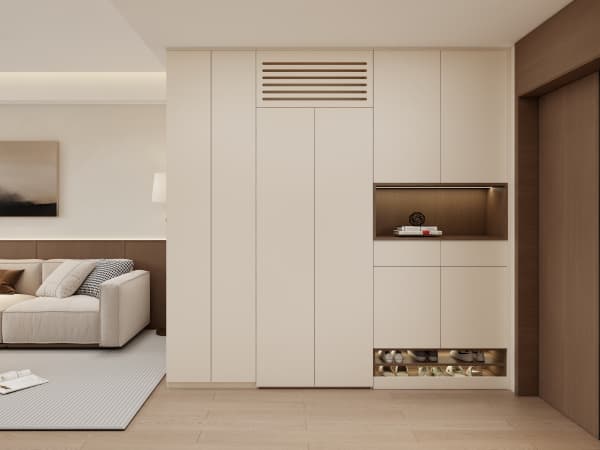
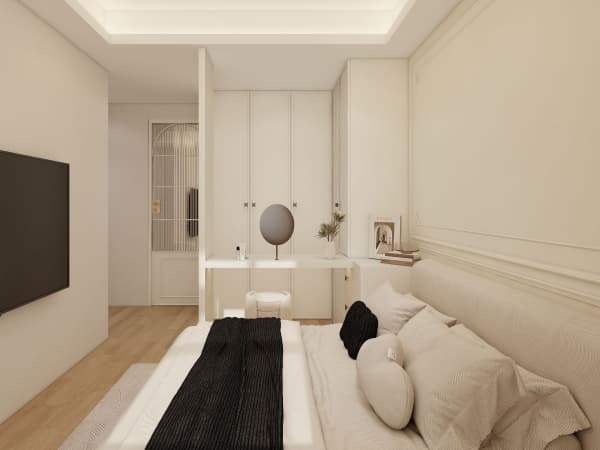
- Place a floor-to-ceiling cabinet run along the noisy wall so its carcass adds mass.
- Fill it with books and boxes; the contents matter as much as the board.
- Add a second layer of dense board or acoustic panel on the wall behind the cabinet.
- Use a resilient channel so the new layer does not touch the old wall and bridge sound.
Two separate masses with air between them beat one thick layer every time. That gap is what stops the vibration from jumping across.
Seal the leaks nobody notices
Most annoying noise sneaks through gaps, not the wall. A 5mm gap under the door carries more sound than you would think, and the space where pipes meet the wall is a direct pipe to the neighbour.
- Fit a brush or rubber sweep at the base of the bedroom and office doors.
- Seal around pipe entries with acoustic caulk, not ordinary silicone.
- Close the gap at the top of the bomb shelter frame if it backs a noisy wall.
- Use weatherstripping on the main door so corridor sound stays outside.
These fixes are cheap and quick, yet they often cut more irritation than the big panels, because they stop the sound that was cheating around the edges.
Ceiling and window fixes
If the noise comes from above, a dropped ceiling with insulation above the board helps, though headroom in a 2.6m flat is tight, so keep the drop small. For windows facing a busy corridor or road, thicker laminated glass and a proper seal reduce both traffic and neighbour sound.
Remember that HDB restricts changes to corridor windows and the main door position, so check before you alter anything facing the common area. Internal windows between rooms are fair game and a good place to add a second glaze.
Setting expectations and getting it done
Be clear: you will not get a recording studio. Good work cuts the sharp edges of neighbour life, drops the TV thump to a murmur, and lets you sleep, but a shout next door will still carry. Spend on the wall you share with the loudest neighbour, seal the gaps, and let carpentry do the heavy lifting.
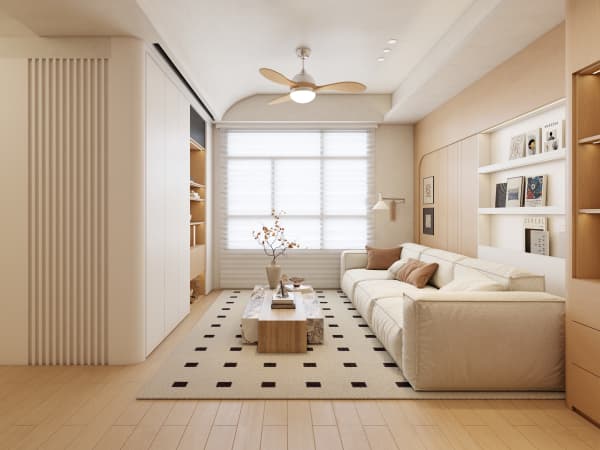
If you are redoing the whole flat, whole-house customisation lets the sound treatment and the storage be the same cabinets, so you pay once for a wall that is both quiet and useful instead of bolting panels onto bare plaster later.