A Straight Talk on HDB Wardrobe: a finish that resists marks
When you plan an HDB Wardrobe, the shell of the flat sets the rules. Work around windows and the bomb shelter door so nothing blocks airflow or access.
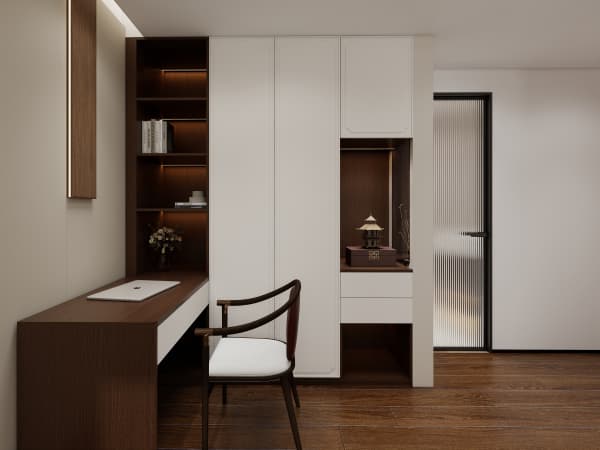
Starting Your HDB Wardrobe Plan Right
Count what you actually own: long dresses, folded tees, shoes, bags. The mix decides the internal layout more than any catalogue.
Measure the wall, note the window and the bomb shelter door before quoting, because those fixed items shape the feasible plan.
Photograph your current wardrobe contents. The photo reveals the truth about how much hanging versus shelf space you need.
Match the handle finish to the bedroom door handle so the room reads as one designed space.
Drawers Versus Hanging Space
Drawers suit folded clothes, socks and accessories; hanging suits shirts and dresses. A balanced mix serves daily life best.
Keep frequently used items at mid height for easy reach, because the things you grab daily should never be a stretch or a squat.
Put delicate items in felt-lined drawers so they do not snag, a small touch that protects the clothes you actually care about.
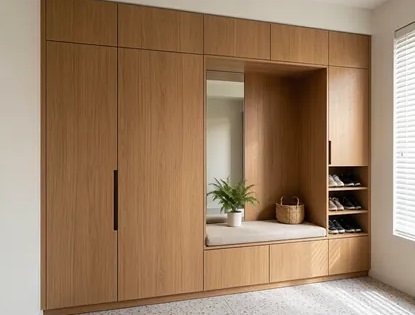
Use ventilated fronts for shoes; sealed-in footwear is the fastest route to a bedroom that reeks.
Materials That Handle Humidity
Plywood carcasses resist moisture better than particle board in a humid bedroom. A laminate or veneer face wipes clean of marks.
Spend on the carcass because that is what warps first when the Singapore air does its worst through an open window.
Ask what the box is made of before you compare prices, because two wardrobes at the same ticket can hide very different cores.
Match the handle finish to the bedroom door handle so the room reads as one designed space.
Care That Keeps It New
Wipe marks promptly and keep the interior dry. Check hinges and runners yearly and tighten if needed before they work loose.
Small habits add years to the wardrobe, because neglect, not normal use, is what actually wears a fitted cabinet down.
Rotate seasonal items twice a year so nothing hides at the back untouched and forgotten for three years.
Match the handle finish to the bedroom door handle so the room reads as one designed space.
Lighting Inside the Wardrobe
A motion-sensor LED strip inside means no fumbling in the dark. Wire it during carpentry so nothing shows afterwards.
Warm light makes colours read truer than cool, so you do not leave home in a shirt that clashed under a blue bulb.
Put the sensor at the door edge so it switches on the moment you open, and off a minute after you close.
Rotate seasonal items twice a year so nothing hides at the back forgotten for three years.
Sliding Versus Hinged Doors
Sliding doors need less clearance but more depth; hinged doors seal better and cost less. Pick by the room, not the trend.
In tight bedrooms, sliding often wins on space, because a hinged door that swings into the bed is a daily nuisance.
If you choose hinged, use soft-close hinges so the door does not bang at midnight when someone grabs work clothes.
Match the handle finish to the bedroom door handle so the room reads as one designed space.
The best wardrobe is the one you forget about because it just works. Plan the interior by item type, and mornings get easier.