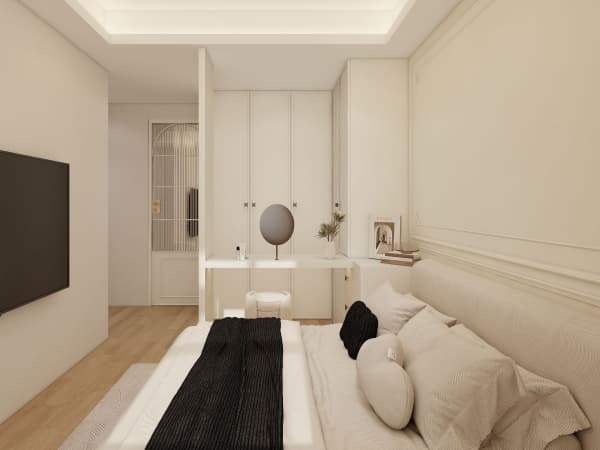
A Straight Talk on HDB Wardrobe: a timeless neutral look
HDB Wardrobe carpentry is the biggest storage decision in a bedroom, and a poor layout nags you every single morning. Start by counting what you actually own.
Budget Bands That Work
As a market observation, a built-in wardrobe for a typical bedroom often runs from the low thousands upward depending on size and materials.
Plywood and soft-close hardware lift the price but extend the life, so they are usually worth the upgrade over the cheapest build.
Spend the top of the budget on the carcass and the internal fittings, because those are what you touch and feel every day.
Rotate seasonal items twice a year so nothing hides at the back forgotten for three years.
Corner Wardrobes That Use the Wall
An L-shaped wardrobe turns a dead corner into the main storage wall. Angle the shelves to reach the back without a black hole.
It frees the room centre and uses otherwise wasted space, which is gold in a compact HDB bedroom.
Put the least-used items in the deep corner and the daily things on the easy faces, so the awkward bit earns its place.
Rotate seasonal items twice a year so nothing hides at the back forgotten for three years.
Materials That Handle Humidity
Plywood carcasses resist moisture better than particle board in a humid bedroom. A laminate or veneer face wipes clean of marks.
Spend on the carcass because that is what warps first when the Singapore air does its worst through an open window.
Ask what the box is made of before you compare prices, because two wardrobes at the same ticket can hide very different cores.
Toss a sachet of cedar or charcoal inside; it is cheap insurance against the smell that ruins good clothes.
Handles and Soft-Close Tips
Recessed handles keep the front clean and avoid snagging clothes. Soft-close on doors and drawers is worth the upgrade every time.
Quality runners stop drawers from jamming under load, which is the failure that makes a wardrobe feel cheap fast.
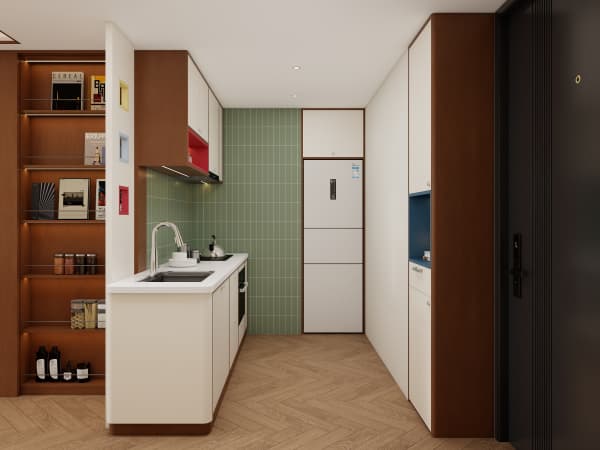
Match the handle finish to the bedroom door handle so the room reads as one designed space rather than mixed leftovers.
Rotate seasonal items twice a year so nothing hides at the back forgotten for three years.
HDB Wardrobe Myths to Drop
One myth is that more hanging space is always better. Most people need more folded storage than they think, and shelves serve them.
Another is that sliding doors save room. They need less swing space but more depth, and freestanding wastes the wall height a built-in uses.
A third myth is that the door face is the wardrobe. The internal layout is what you live with, and that is where to spend the thought.
Rotate seasonal items twice a year so nothing hides at the back forgotten for three years.
Working Around the Bomb Shelter
The bomb shelter door cannot be hidden behind joinery in a way that blocks it. Design the wardrobe to frame it instead of cover it.
A flush panel in the same finish keeps the wall looking continuous, so the shelter disappears into the design rather than fighting it.
Leave the shelter handle reachable. A wardrobe that traps the shelter door is a compliance fail you do not want at inspection.
Match the handle finish to the bedroom door handle so the room reads as one designed space.
Built-in wardrobes turn dead wall into calm storage. Keep the layout flexible, the finish neutral, and the bedroom stays restful.