Carpentry Price Singapore: Avoiding a quote you trust
The phrase Carpentry Price in Singapore covers more than cabinets. It means reading the flat, the rules and your own habits before a single measurement is taken, because the early choices decide the late regrets.
A practical view of custom versus ready furniture
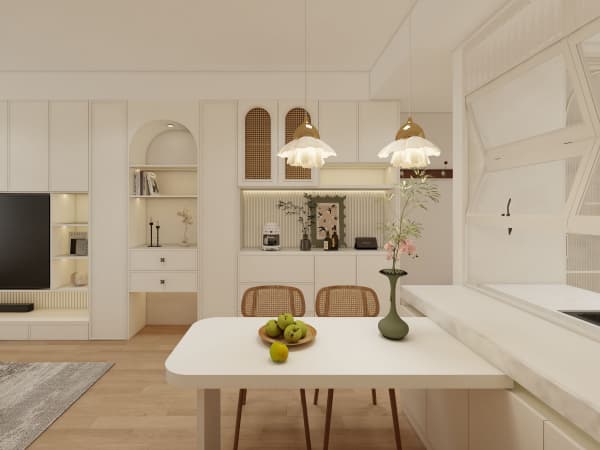
Ready furniture wins on price and speed for the common pieces, and you can see it before you buy. The trap is forcing a standard size into a tight room and living with the gap. A mix works best: custom for the fixed walls, ready for the movable pieces you may take along.
How common layout mistakes affect your schedule
The silent mistake is sealing the services. A cabinet built over the meter or the trap with no access panel becomes a future blocker. Map the water heater, the valve and the trunk before the drawings freeze. The five minutes of planning saves the day the plumber cannot reach the pipe.
What renovation stages in order cost you in the end
Renovation is a relay, not a race. Hack first, then the wet trades tile and screed, then electrical and plumbing first-fix, then paint, then the carpenter measures and builds, then the second fix and the clean. Each stage blocks the next, so a delay at the front echoes to the end. A clear schedule keeps the chain moving.
Take a condo apartment as a typical case: the owner had three bedrooms to fit, and the carpenter planned the storage around the actual items rather than a standard grid, which removed the dead corners that plague smaller Singapore homes.
Getting particle board value sorted early
Do not put particle board where it gets wet. A spill on a particle board base cabinet spreads fast and the board crumbles. If budget forces particle board in the kitchen, at least specify plywood for the sink base and the kickboard. The small upgrade prevents a full rebuild two years on.
Where estimating your budget usually go wrong
Run two scenarios, a value build and a premium build, and see where they part. Often the gap is the board grade and the drawers, not the count. Knowing this lets you trade down the face and up the inside, getting the same daily feel for less. The calculator makes the trade visible.
Common questions about maximising cabinet storage
Storage fails not from lack of cabinets but from poor internals. Deep drawers beat deep shelves because you see everything without digging. In a Singapore kitchen where space is tight, a pull-out for the blender and a tray divider for the lids turn a cramped cabinet into a working one. Spend on the inside, not just the face.
How carpentry warranties affect your schedule
Keep a record of the board grade, the hinge type and the invoice dates in a single file. When a drawer runner fails in year two, that file is what the carpenter needs to honour the claim without argument. Five minutes of notes today saves a long search and a denied claim three years on.
Common questions about reading a quotation
Watch the variation clauses. A quote at S$15,000 that becomes S$22,000 after 'unforeseen' items hurts more than a S$19,000 firm quote. Ask what triggers a variation and cap it in writing. Most reasonable carpenters will agree to a 10 percent ceiling if you ask before signing.
Common questions about typical carpentry budgets
If cash is tight, the renovation loan from HDB for flats can reach S$30,000 at about 5 percent, and banks offer similar amounts for private homes. Spread the big-ticket items, and keep a 10 percent buffer for the changes you will inevitably want once the walls come down. Few renovations end at the first quote.
How payment milestone schedules shape the final result
The deposit protects the workshop from a no-show, but anything above 50 percent before you see work is a risk. In Singapore, disputes over renovation deposits are common, so keep records of every transfer and the stage it covered. A written schedule with amounts removes the grey area.
Take a corner terrace house as a typical case: the owner had two bedrooms and a kitchen to fit, and the carpenter planned the storage around the actual items rather than a standard grid, which removed the dead corners that plague smaller Singapore homes.
A Carpentry Price in Singapore succeeds when the small calls are made well. The right board at the sink, the soft-close where you open daily, the layout that respects the work triangle, these are the marks of a build done right.
One more point worth a line: keep the contact of the person who owns your project in a single note, with the quote, the permit and the warranty. When something needs a fix in year two, that note is what turns a denied claim into a quick visit. The paper you file today is the service you get later.
A small habit that pays off is to photograph the finished work at handover, before the furniture goes in. The shots show the edges, the gaps and the mitres as they should be, and give you proof if a fault appears after. Five minutes with a phone beats a week of argument about what changed.
Think about the next owner too. A clean, compliant build with the paperwork in order sells faster and for more, because the buyer's lawyer has fewer questions. The work you do for yourself also works for the resale, so treat the records as part of the asset, not just the receipt.
Do not chase the lowest number at the cost of the details. A job that saves on the edge banding and the hinge shows it within a year, and the fix costs more than the saving. Spend on the parts you touch daily, and the home feels right long after the photos are taken.
Finally, give the build a week before you judge it. Wood settles, doors find their rest, and a small adjustment at the start of use prevents a bigger one later. A carpenter who returns for the punch-list is worth more than one who disappears the day the balance is paid.
Match the build to how you actually live, not to a showroom you visited once. The kitchen you cook in and the wardrobe you open daily should reflect your routine, because a home that fits your habits is the one you stop noticing, and that is the highest praise a renovation can earn.