Carpentry Price Singapore: Questions on Marine Parade
A Carpentry Price in Singapore lives or dies on the small decisions made before the build. Pick the right board where water sits, keep the escape route clear, and work with the flat instead of against it.
A practical view of payment milestone schedules
Never pay in full up front. A fair schedule runs a deposit of 20 to 30 percent, a progress payment after the carcass, and the balance on completion and defect clearance. Tie each payment to a visible stage so you keep room to flag faults before the money leaves your hands.
A practical view of particle board value
Do not put particle board where it gets wet. A spill on a particle board base cabinet spreads fast and the board crumbles. If budget forces particle board in the kitchen, at least specify plywood for the sink base and the kickboard. The small upgrade prevents a full rebuild two years on.
Common questions about renovation stages in order
Hold a weekly site check at each handover. When the tiler leaves, walk the floor for hollow tiles. When the painter leaves, check the edges. Catching a fault before the next trade covers it saves a fight later. The stage checks are the cheapest insurance in the whole job.
Getting reading a quotation sorted early
Watch the variation clauses. A quote at S$15,000 that becomes S$22,000 after 'unforeseen' items hurts more than a S$19,000 firm quote. Ask what triggers a variation and cap it in writing. Most reasonable carpenters will agree to a 10 percent ceiling if you ask before signing.
Understanding carpentry warranties in Singapore
Keep a record of the board grade, the hinge type and the invoice dates in a single file. When a drawer runner fails in year two, that file is what the carpenter needs to honour the claim without argument. Five minutes of notes today saves a long search and a denied claim three years on.
Getting maximising cabinet storage sorted early
Edit before you build. Owners who plan storage around what they actually own end up with less but better. Count the pots, the food containers, the rice cooker. A carpenter can only optimise what you describe, so a short inventory session saves a cabinet you will never fill.
Getting estimating your budget sorted early
Run two scenarios, a value build and a premium build, and see where they part. Often the gap is the board grade and the drawers, not the count. Knowing this lets you trade down the face and up the inside, getting the same daily feel for less. The calculator makes the trade visible.
A practical view of common layout mistakes
The silent mistake is sealing the services. A cabinet built over the meter or the trap with no access panel becomes a future blocker. Map the water heater, the valve and the trunk before the drawings freeze. The five minutes of planning saves the day the plumber cannot reach the pipe.
How typical carpentry budgets shape the final result
If cash is tight, the renovation loan from HDB for flats can reach S$30,000 at about 5 percent, and banks offer similar amounts for private homes. Spread the big-ticket items, and keep a 10 percent buffer for the changes you will inevitably want once the walls come down. Few renovations end at the first quote.
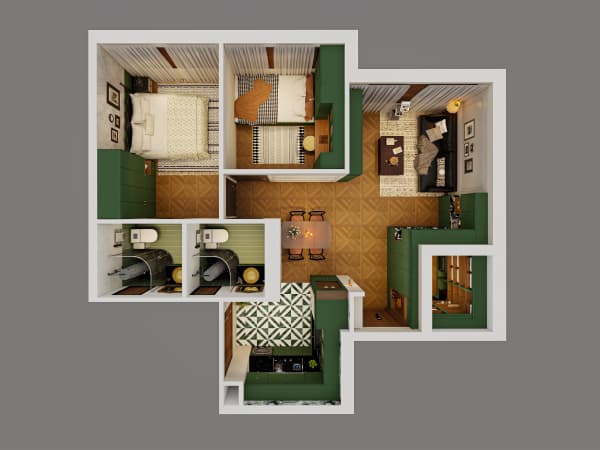
Take a resale 5-room flat as a typical case: the owner had a master bedroom suite to fit, and the carpenter planned the storage around the actual items rather than a standard grid, which removed the dead corners that plague smaller Singapore homes.
Common questions about custom versus ready furniture
Ready furniture wins on price and speed for the common pieces, and you can see it before you buy. The trap is forcing a standard size into a tight room and living with the gap. A mix works best: custom for the fixed walls, ready for the movable pieces you may take along.
In Tampines, a a landed corner terrace often comes with an awkward service yard, and the build that works treats it as a second kitchen rather than a dump. A S$12,000 budget stretches further when the yard pulls its weight.
The real win from a Carpentry Price in Singapore is a home that fits how you live, not how a showroom looks. Build to your habits, keep the paperwork, and the daily use will thank you for years.
One more point worth a line: keep the contact of the person who owns your project in a single note, with the quote, the permit and the warranty. When something needs a fix in year two, that note is what turns a denied claim into a quick visit. The paper you file today is the service you get later.
A small habit that pays off is to photograph the finished work at handover, before the furniture goes in. The shots show the edges, the gaps and the mitres as they should be, and give you proof if a fault appears after. Five minutes with a phone beats a week of argument about what changed.
Think about the next owner too. A clean, compliant build with the paperwork in order sells faster and for more, because the buyer's lawyer has fewer questions. The work you do for yourself also works for the resale, so treat the records as part of the asset, not just the receipt.
Do not chase the lowest number at the cost of the details. A job that saves on the edge banding and the hinge shows it within a year, and the fix costs more than the saving. Spend on the parts you touch daily, and the home feels right long after the photos are taken.
Finally, give the build a week before you judge it. Wood settles, doors find their rest, and a small adjustment at the start of use prevents a bigger one later. A carpenter who returns for the punch-list is worth more than one who disappears the day the balance is paid.
Match the build to how you actually live, not to a showroom you visited once. The kitchen you cook in and the wardrobe you open daily should reflect your routine, because a home that fits your habits is the one you stop noticing, and that is the highest praise a renovation can earn.