HDB Interior Design Singapore: 4-Room Budget Breakdown
Budgeting for HDB interior design Singapore starts with one number: a 4-room flat is about 90 sqm. Market ranges put a 4-room BTO renovation at roughly S$30,000 to S$45,000, while a resale flat of the same size commonly runs S$50,000 to S$70,000 because of hacking and rewiring. Here is where every dollar goes.
Why BTO and resale budgets differ by S$20,000
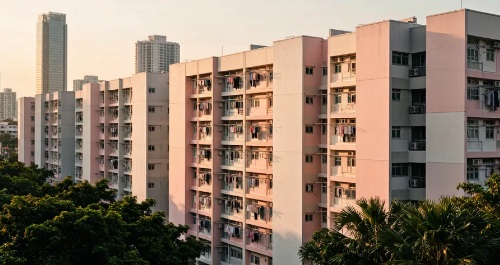
A BTO flat arrives with basic provisions already installed. You get floor tiles in the wet areas, doors, and some kitchen and bathroom fittings. You are starting from a blank, sound shell. A resale flat arrives with someone else's decisions baked in, and removing them costs money before you build anything.
The four line items that create the gap:
- Hacking and disposal of old tiles, carpentry and false ceilings. Commonly S$4,000 to S$8,000 in a resale 4-room, and close to zero in a BTO.
- Full rewiring with a new distribution board. Commonly S$5,000 to S$9,000 in an older resale flat. A BTO needs additional points only.
- Bathroom rebuilds with new waterproofing and sanitary ware. Two bathrooms stripped and redone typically costs S$12,000 to S$18,000. A BTO bathroom often needs only an upgrade of fittings.
- Making good after hacking, including plastering, screed and re-levelling. Budget S$2,000 to S$4,000 in resale.
Treat all of these as market ranges. Your actual figure depends on how much you choose to remove.
Line-by-line breakdown for a 4-room BTO at S$38,000
This is a realistic mid-range allocation for a 90 sqm BTO with three bedrooms, one common bathroom and one master bathroom, done to a good standard without imported specialty finishes.
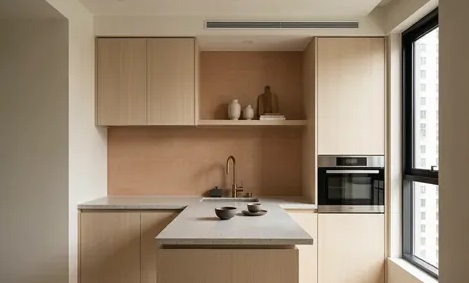
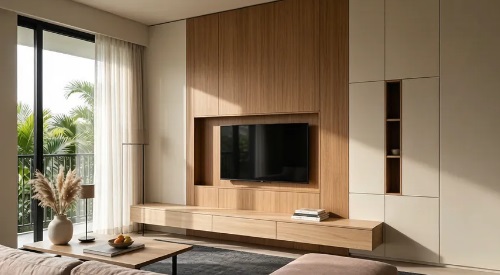
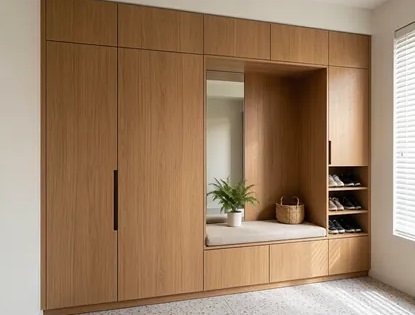
- Carpentry, S$16,000 to S$18,000. This is the biggest slice and it should be. Kitchen top and bottom cabinets, three wardrobes, TV console, entryway shoe cabinet, and one study nook. Priced by running foot, with laminate finishes and full-extension soft-close hardware.
- Flooring, S$4,500. HDB-approved vinyl or laminate across living, dining and three bedrooms, roughly 700 square feet of dry area after excluding wet zones, with skirting.
- Electrical, S$3,500. Around 20 additional power points, 6 data and TV points, lighting circuits, aircon isolators, and a dedicated point for the water heater and oven.
- Painting, S$2,200. Two coats over the full flat with one accent wall and ceiling.
- Quartz countertops, S$2,800. Kitchen run plus both bathroom vanity tops, 20mm quartz.
- False ceiling and cornice, S$2,500. Living, dining and bedroom aircon boxing plus cove lighting in the living area.
- Plumbing and sanitary installation, S$1,800. Fitting basins, mixers, water heaters and bidets.
- Glass, mirrors and shower screens, S$1,600. Two frameless shower screens and vanity mirrors.
- Feature works and light masonry, S$1,200. A lightweight non-ceramic partition for a study divider, plus tiling touch-ups.
- Permit application, protection works, disposal and final cleaning, S$1,400.
That totals roughly S$37,500. Appliances, lights, curtains, furniture and mattresses sit outside this and typically add S$12,000 to S$20,000 for a family of four.
How to build your HDB interior design budget in the right order
Most people allocate money to what they can see and run short on what they use daily. Do it this way instead.
- Set the total ceiling first, including a 10 percent contingency. On a S$40,000 job that means S$4,000 held back, untouched, for site surprises.
- Lock the non-negotiables. Electrical, waterproofing, plumbing and any hacking. These are the items that cost triple to fix after carpentry is installed.
- Allocate 40 to 45 percent to carpentry. In a 90 sqm flat, storage is what makes the space livable, and carpentry is not something you retrofit cheaply.
- Allocate flooring next, as one continuous product across dry areas. Splitting products to save S$800 usually costs you the visual gain you were paying for.
- Spend on hardware, not door fronts. A soft-close full-extension runner outlasts a fancy laminate. Upgrading hinges and runners across a whole flat adds roughly S$900 and you feel it every day for ten years.
- Leave decorative items last. Feature walls, arches, fluted panels and cove lighting are the first things to cut if the tender comes back over budget.
- Reconcile against the quotation line by line before signing. If your allocation says S$16,000 carpentry and the quote says S$11,000, ask which pieces were dropped.
Where to save without regret, and where not to
Safe savings in a 4-room flat:
- Skip the full-height feature wall in the living room. A well-lit painted wall with a slim shelf costs S$400 instead of S$2,500.
- Use open shelving in the utility area rather than doored cabinets. Saves S$600 to S$900.
- Keep the BTO's existing wet-area floor tiles. They are already installed and warrantied, and overlaying them adds cost and height.
- Reduce wardrobe depth from 600mm to 450mm in the two common bedrooms where nobody hangs long coats. This is HDB flat space saving that also cuts carpentry cost by roughly S$700.
- Buy lights and appliances yourself. Trade markups on light fittings commonly run 20 to 40 percent.
Do not save on these:
- Waterproofing and the 24-hour ponding test. A leak into the unit below is the most expensive mistake in HDB renovation.
- Electrical point count. Adding a socket after tiling means hacking a channel through a finished wall.
- Carpentry carcass thickness and hardware grade.
- Countertop thickness at the peninsula edge, where knocks happen.
- Range hood extraction capacity if you are building an HDB open concept kitchen. Under-sized extraction turns into a permanent oil film problem.
Timeline and payment schedule that protect your money
An HDB renovation permit is applied for by your HDB Licensed Renovation Contractor from the Directory of Renovation Contractors, and processing takes about two weeks. Build that into your BTO renovation timeline. A 4-room BTO fit-out typically runs eight to twelve weeks after approval; a resale flat with full hacking runs twelve to sixteen. Noisy works are restricted to weekdays 9am to 6pm, with none on Sundays or public holidays, so a contractor promising weekend catch-up is quoting a schedule they cannot legally keep.
Structure payments against milestones, not dates:
- 10 percent on contract signing.
- 25 percent on completion of hacking, masonry and first-fix electrical.
- 30 percent on completion of tiling, waterproofing test and ceiling works.
- 25 percent on carpentry installation and countertop fitting.
- 10 percent retained until the joint defects inspection is cleared, with a written rectification deadline.
Never release the final tranche on the day of handover. Walk the flat with a torch and a roll of masking tape first, mark every defect, and agree a date in writing.
A 4-room flat gives you 90 sqm to work with, and the budget only stretches when the carpentry, electrical and layout are planned as one system rather than five separate purchases. That is the case for whole-house customization: your wardrobes, kitchen, storage and lighting get measured, priced and produced together, so you are not paying twice for coordination that fell between trades. Start by writing down your total ceiling, hold back 10 percent, and let the design work inside that number instead of chasing it.