HDB Wardrobe Tips: a wardrobe for a growing child
A well-planned HDB Wardrobe removes daily friction from getting dressed. In compact flats, built-ins use the full wall height that freestanding units waste.
Budget Bands That Work
As a market observation, a built-in wardrobe for a typical bedroom often runs from the low thousands upward depending on size and materials.
Plywood and soft-close hardware lift the price but extend the life, so they are usually worth the upgrade over the cheapest build.
Spend the top of the budget on the carcass and the internal fittings, because those are what you touch and feel every day.
Toss a sachet of cedar or charcoal inside; it is cheap insurance against the smell that ruins good clothes.
Sliding Versus Hinged Doors
Sliding doors need less clearance but more depth; hinged doors seal better and cost less. Pick by the room, not the trend.
In tight bedrooms, sliding often wins on space, because a hinged door that swings into the bed is a daily nuisance.
If you choose hinged, use soft-close hinges so the door does not bang at midnight when someone grabs work clothes.
Use ventilated fronts for shoes; sealed-in footwear is the fastest route to a bedroom that reeks.
A Layout That Fits Your Actual Clothes
Split the interior by item type: long hang, short hang, shelves, drawers. Most wardrobes under-use folded storage and regret it.
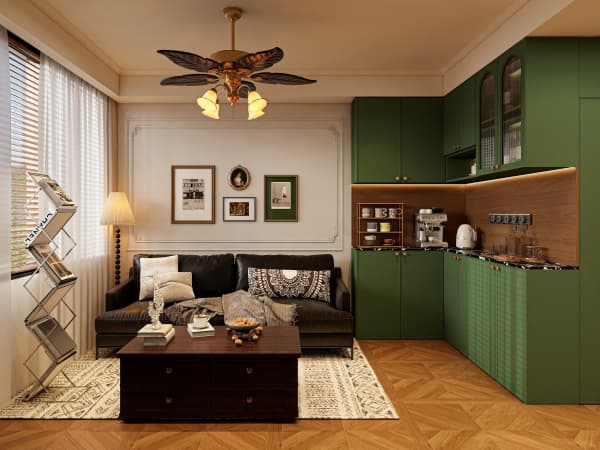
Adjustable shelves let the layout shift as your wardrobe changes, so the cabinet grows with you instead of against you.
Give long dresses their own clear section up top, because cramming them into a short hang zone wrinkles them permanently.
Toss a sachet of cedar or charcoal inside; it is cheap insurance against the smell that ruins good clothes.
HDB Wardrobe Myths to Drop
One myth is that more hanging space is always better. Most people need more folded storage than they think, and shelves serve them.
Another is that sliding doors save room. They need less swing space but more depth, and freestanding wastes the wall height a built-in uses.
A third myth is that the door face is the wardrobe. The internal layout is what you live with, and that is where to spend the thought.
Rotate seasonal items twice a year so nothing hides at the back forgotten for three years.
A Finish That Resists Marks
Melamine and good laminate resist scuffs from hangers and bags. Matte hides fingerprints; gloss brightens a small room if used well.
Pick a finish you can clean without special products, because a high-maintenance door gets ignored and stays grubby.
Avoid pure white if the room gets morning sun, since a warm-toned off-white ages more gracefully than a stark white.
Keep everyday shoes at the bottom and occasion pairs up high, so the morning rush is never a dig.
Ventilation to Avoid Musty Smells
Leave a small gap at the back or use vented panels so air moves. Humidity builds fast behind a sealed wardrobe against an outer wall.
Good extraction in the bedroom helps the whole wall, so the wardrobe is only as fresh as the air the room can move.
Toss a sachet of cedar or charcoal inside; it is a cheap insurance against the smell that ruins good clothes.
Keep everyday shoes at the bottom and occasion pairs up high, so the morning rush is never a dig.
Built-in wardrobes turn dead wall into calm storage. Keep the layout flexible, the finish neutral, and the bedroom stays restful.